
ARTIST SETBYOL OH SHEDS LIGHT ON HER DESIGNS

It might seem like a cliché to say that Setbyol Oh began designing light objects on a dark, gloomy night in Germany, but isn’t it fitting when light is born from darkness?
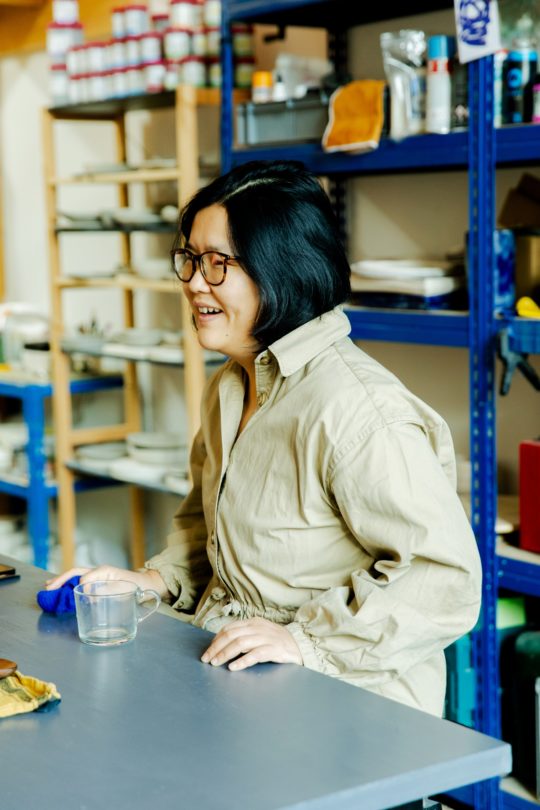
The Korean-born artist was working as a painter on the island of Sylt when, in the winter of 2013, the German summer getaway for the wealthy became too depressing to bear. “I don’t understand why German people like Sylt,” Setbyol says candidly over cocoa-flavored tea in her new two-story studio in Mitte, which she shares with other artists. “It’s a very beautiful landscape, but [in winter] it’s always raining and so cold. One night, I thought, ‘No, this is too dark. I need some light in my life.’”
Hoping to bring warmth and comfort to her home, she crafted a lounge lamp for her bedroom using materials she’d once bought at a Buddhist store in Jeonju, South Korea. Her friends, fascinated with the result, later ordered lamps from her for their own apartments. After a while, Setbyol was achieving greater success with light sculptures than with painting, so she shifted her focus and founded her company, oh licht.
Her early works were inspired by Buddhist lotus lanterns, but gradually, she developed her own style. She also experimented with various types of paper, but they all proved too fragile, tearing over time. That’s when she discovered hanji, a traditional Korean paper made from the inner bark fibers of one-year-old mulberry trees. Naturally strong, hanji is often used in museum restoration, including at the Louvre.
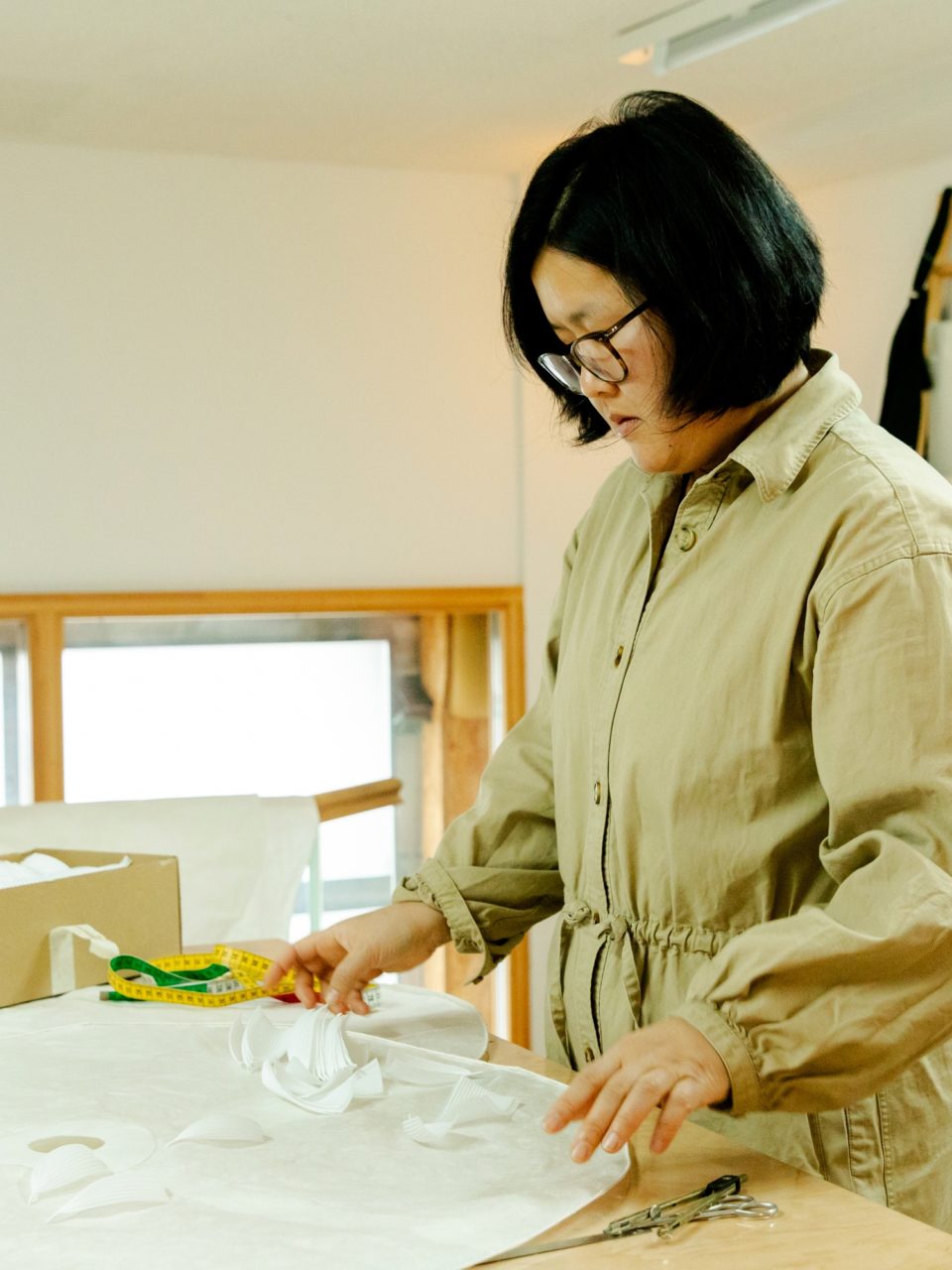
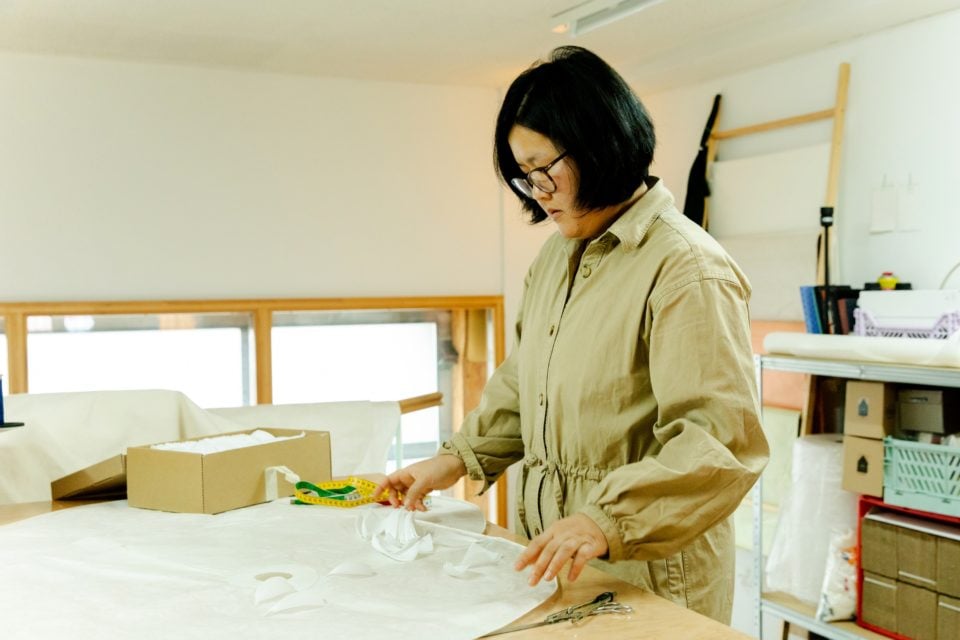
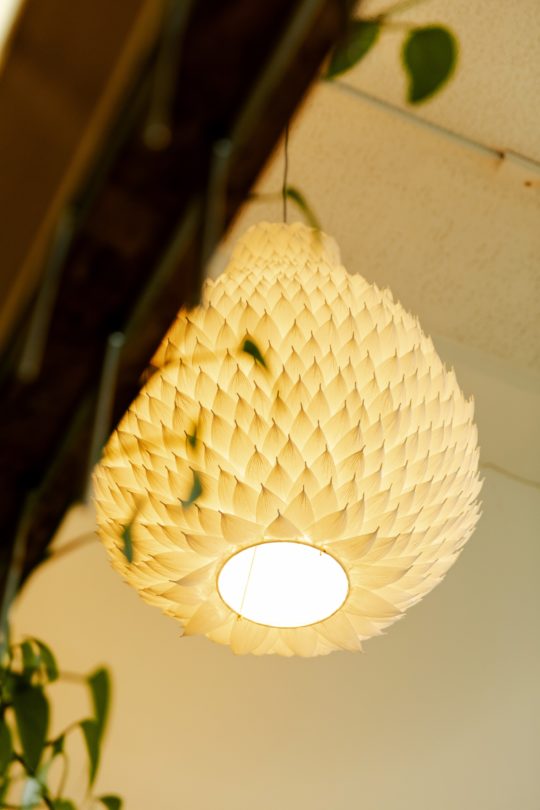
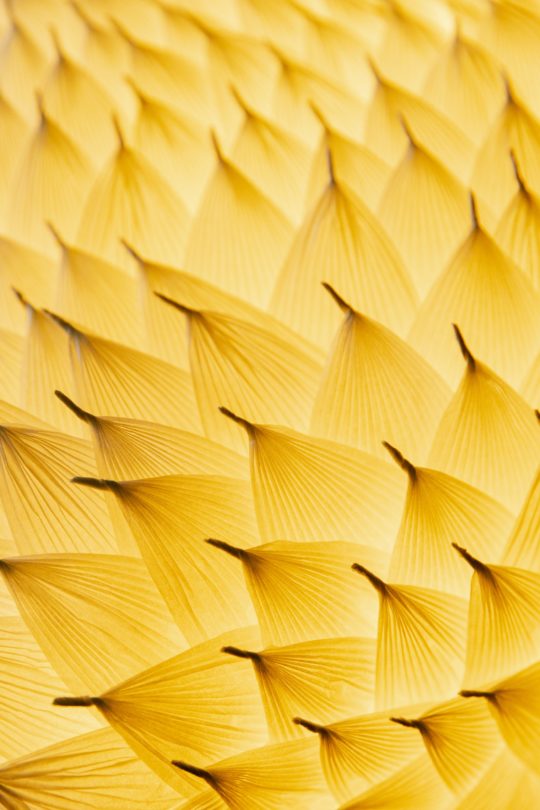
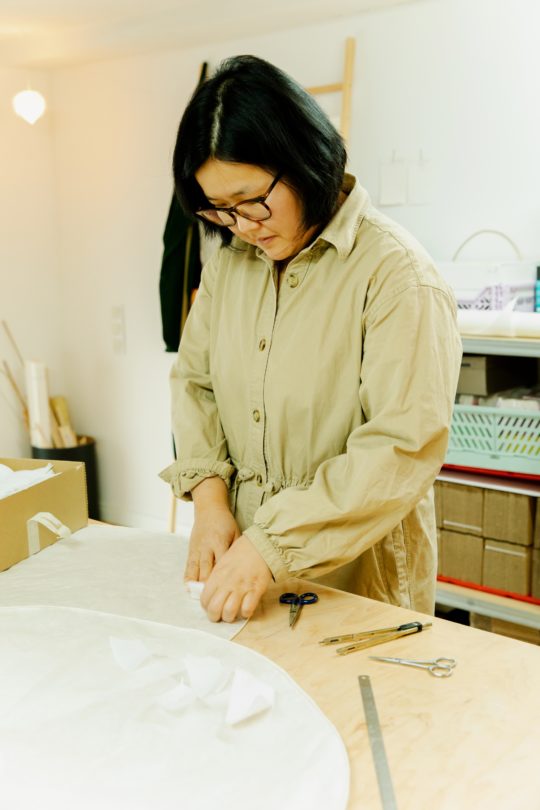
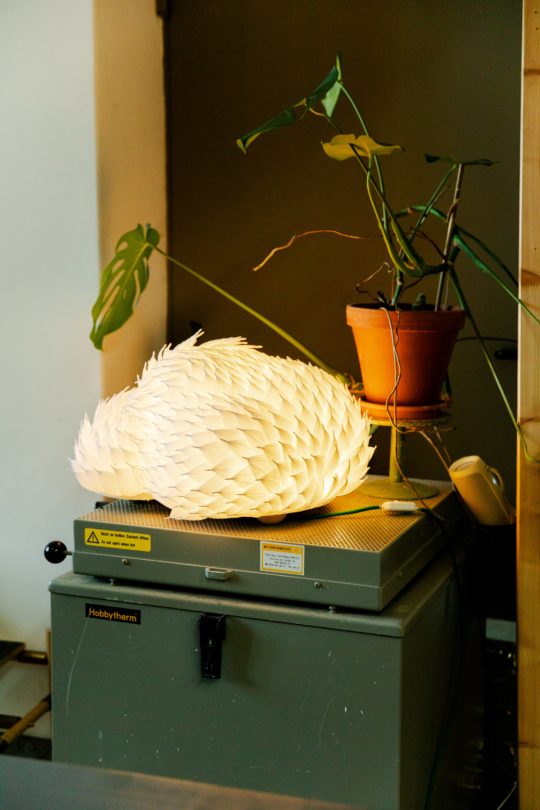
“I make the base shape from hanji, then use silk paper to create leaves [her signature feature], twisting and gluing them onto the structure. It makes the piece feel alive, like it’s something from nature,” Setbyol says.
As word of her work spread, she began selling at galleries, international craft fairs, and exhibitions, including the renowned Grassi Museum in Leipzig, the Museum for Art and Industry in Hamburg, and the German Historical Museum in Berlin.
After two years on Sylt, she moved to Berlin. The winters are still cold and gray, but the vibrant cultural and art scene makes up for it. “Also, in Berlin nobody cares where I’m from,” she adds. “I was the only Korean, if not the only Asian, in all of Sylt. It is very difficult for foreigners.”
Setbyol Oh came to Germany in 1996. Her cousin was living in Hamburg at the time, which sparked her curiosity about life in Europe. She enrolled at the Goethe-Institut for six months to learn German and then applied for a place to study at HFBK Hamburg, which didn’t require a high school diploma. “They only asked for my portfolio. It was my only chance to stay in Germany because I’d initially wanted to finish school here but couldn’t get the right visa.”
Setbyol was accepted and, at just 17, began studying fine art at university. “It was very difficult,” she admits. “The program was quite conceptual. Students had applied with photography collages! Back then, I didn’t even know that was considered art. I was very young.”
“What did you consider to be art?” I ask.
“Painting,” she replies. “I was surprised that many German students weren’t skilled in painting. In Asia, art education is focused on technique and form, not content or concept, which is what they prefer in Germany.”
Setbyol learned to paint from her aunt, who owned an art school. “Every summer, when my parents were working, I would go there,” she shares. “My uncle was also a potter, so I practiced pottery with him. It all started very naturally.”
At university, she expanded her artistic approach, experimenting with mediums and materials like performance, video installation, and porcelain. A professor once took her class to London to explore its art world. “One exhibition stands out in my memory,” Setbyol begins. “Sensation at the Royal Academy of Arts in 1997. It was massive, sensational, and shocking to me. I specifically remember the “A Thousand Years” installation by Damien Hirst, where, in a square glass box, flies hatched from maggots, fed on a cow’s head, and ultimately died in an electric fly trap. The work was one of the most controversial exhibits. I had never seen anything like it.”
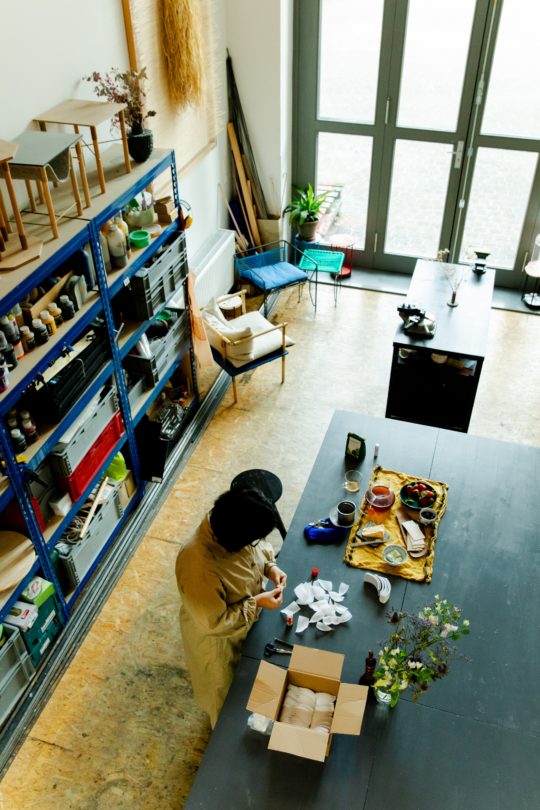
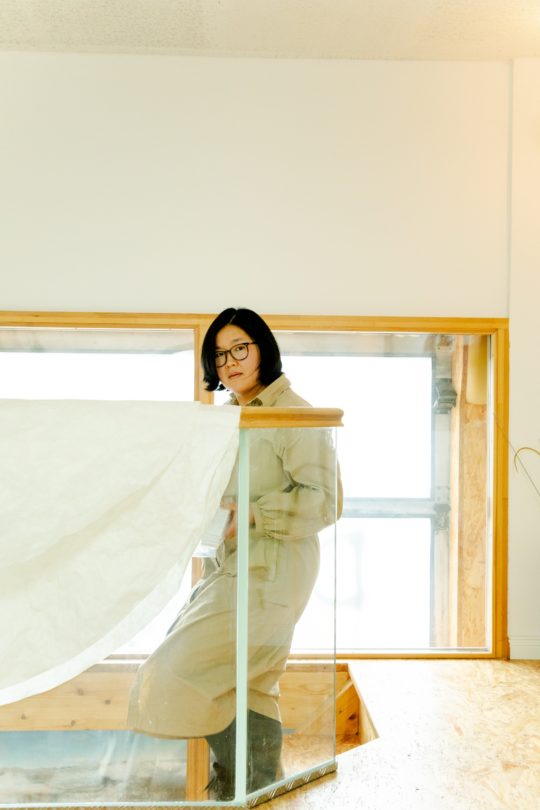
That sense of discovery, of encountering the unexpected, also drives her work today. Upstairs in her studio, she shows me her creations. In the corner hangs a small, round-ish light object that reminds me of a Christmas tree ornament. “It’s called Loulou, after a friend,” she says. On a nearby table lies a large, yet to be folded hanji piece, coated in konjac powder to protect it from moisture. “Treating the paper with konjac starch also makes it flexible, allowing spontaneous, organic forms to emerge,” she explains. I am curious to see what the mixture looks like, so she goes downstairs to retrieve it from the kitchen fridge. “It’s all natural,” she explains while stirring. “You can even eat it, but it has no taste. The Japanese use it with sweets because of its jelly-like texture.”
This piece is part of a commission for a big company in Seoul. “They bought five big designs,” Setbyol says, clearly pleased. She got the job through an art consultant who visited her exhibition in Seoul in 2022. How did it feel to showcase her work in her hometown after exhibiting in European cities?
“It was very special, specifically for my family. At first, I was nervous about doing an exhibition in Korea because I didn’t want people copying my work. hanji is easy to find there. But people really appreciated my pieces, and I was touched by their reactions.”
A standout collection in her repertoire is the Fenster (German for “window”) series, made with parts of a nearly 100-year-old sliding door from a hanok, a traditional Korean house. “A friend found it in a bin and asked if I wanted it. I immediately said yes, then reshaped it by cutting and rearranging the slats.”
Behind the frame lies watermark paper that Setbyol handmade during an internship with Gangolf Ulbricht, a Berlin-based master papermaker known for his museum-quality 3g paper (“You need ten years of practice to make it properly.”) The paper she used for Fenster is 80% bleached hemp and 20% bleached abacá, which creates “a refined quality that beautifully diffuses light”.
Setbyol doesn’t have a single favorite among her designs, but she has a sweet spot for one called Devil’s Tongue—her first piece in which the base structure is made entirely of hanji and konjac starch, without rattan.
“I feel that my work is deeply connected to the materiality of paper. It guides the shape rather than being forced into a fixed form. The name Devil’s Tongue not only reflects this dynamic movement but also refers to the plant whose root is used to produce the konjac starch,” she explains.
Movement is also a fitting way to describe Setbyol’s life—shaped by relocation and cultural shifts (she also has a collection called Way Home, her largest to date, in which she explores the meaning of home, nostalgia, and belonging). But in her day-to-day, she values routine, especially since the art world can be unpredictable. “It’s hard to develop your own philosophy, apply it in your work, and make money from it at the same time. I thought about quitting many times last year,” she admits.
“Preparing for exhibitions always takes a lot of effort, yet there’s no guarantee of income. The studio rent and other expenses still have to be paid every month. Some years, I hardly sell anything—then, at a single craft fair, I might sell enough to make up for an entire year. It’s unpredictable.”
How does she cope with the uncertainty?
“As an artist, you have to take initiative. You can’t just wait and hope. You have to step forward and say, ‘I’m here, and this is my work.’ If I don’t, no one will even know it exists. That’s why I create my light sculptures while also making sure they reach people. It’s all part of the process.”
Her clients’ feedback serves as a powerful source of motivation.
“When customers email me, telling me they love my lighting objects—it’s reassuring to hear that. My customers are brave and loyal. They care about craftsmanship. They don’t want what everybody else has. They want something unique.”
With Setbyol Oh, they’ve found exactly that.
You can find Setbyol Oh’s light objects on display at Berlin’s YUN store until 15 March.