
MOVEMENT, MEMORY AND MEDIATION WITH IRVING RAMÓ

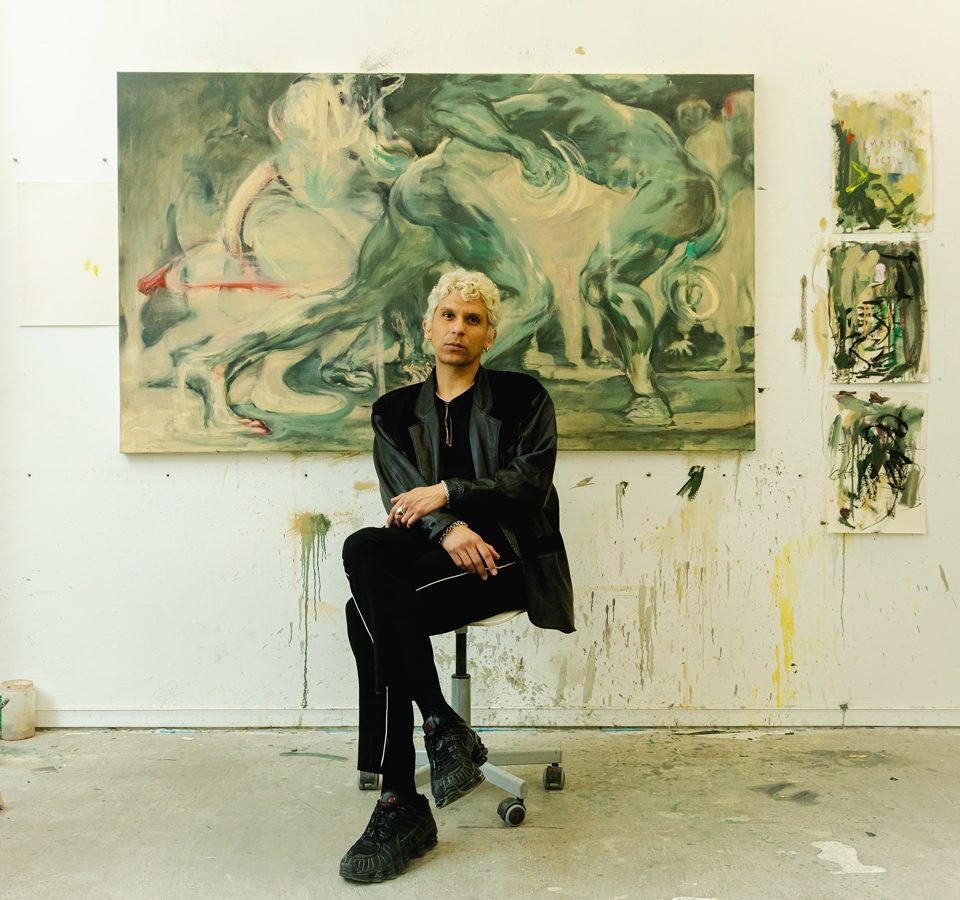
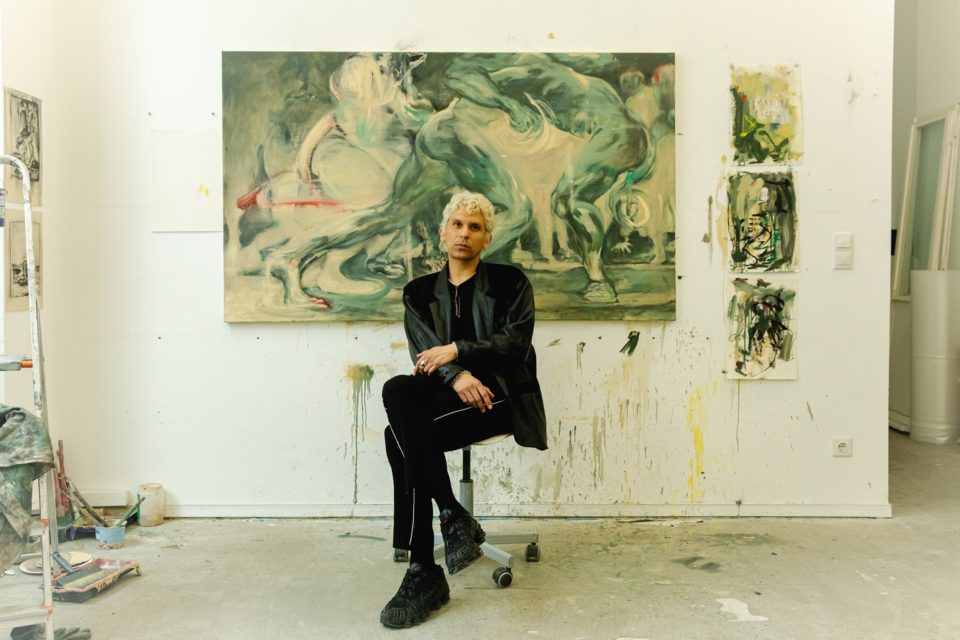
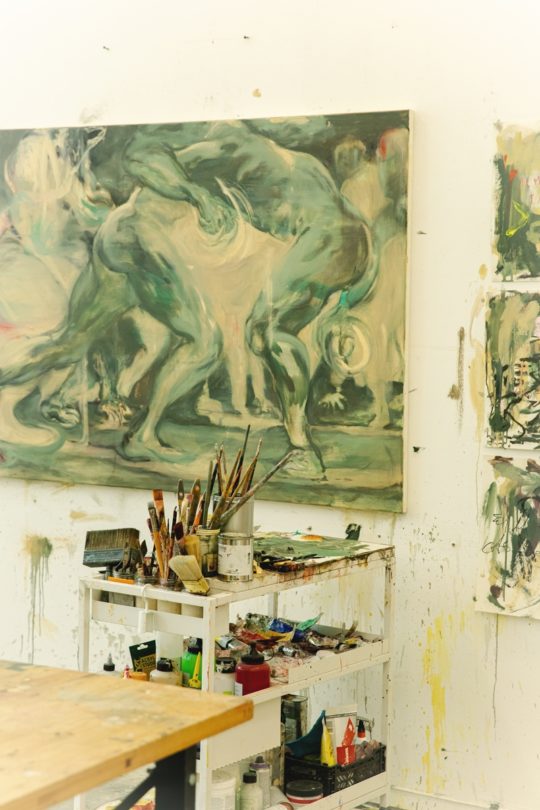
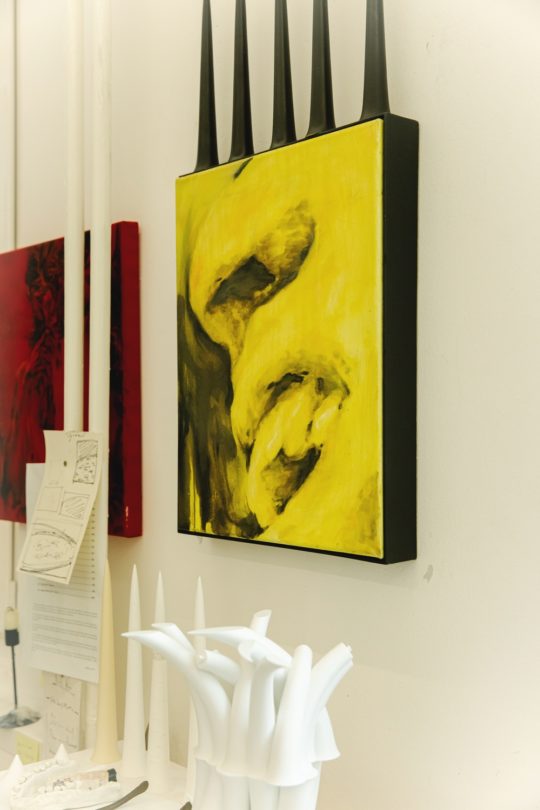
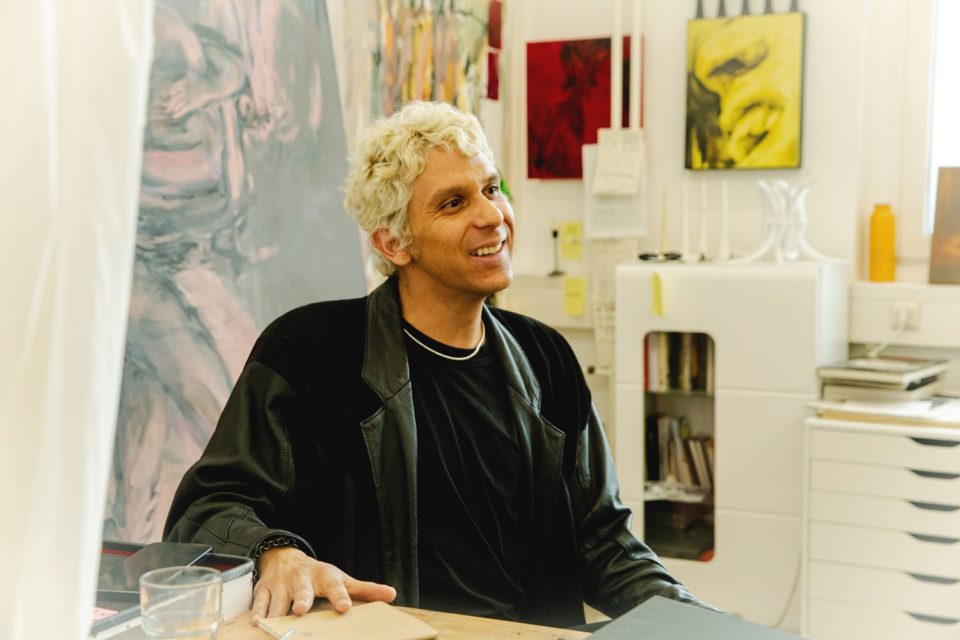
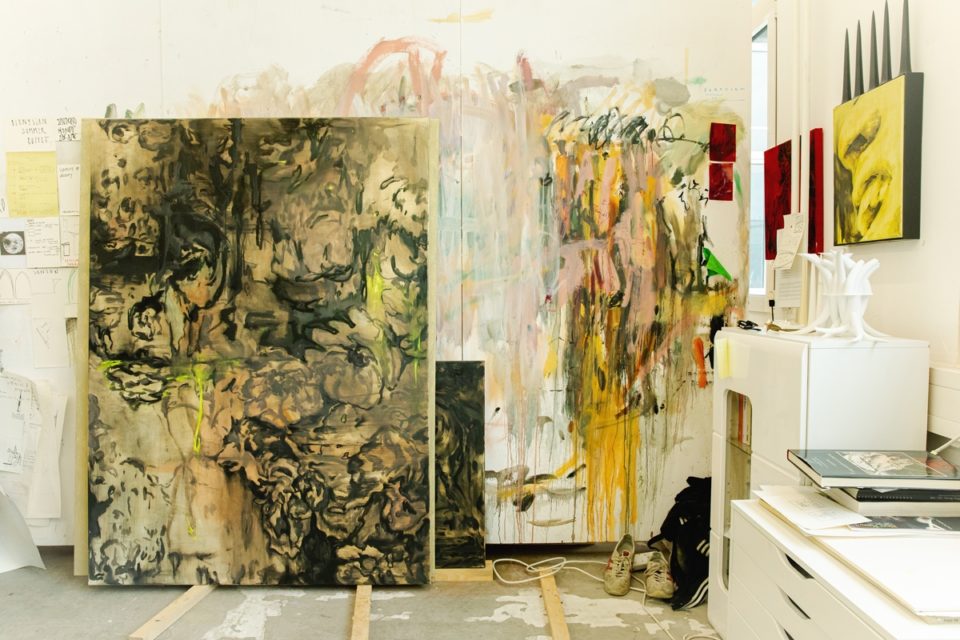
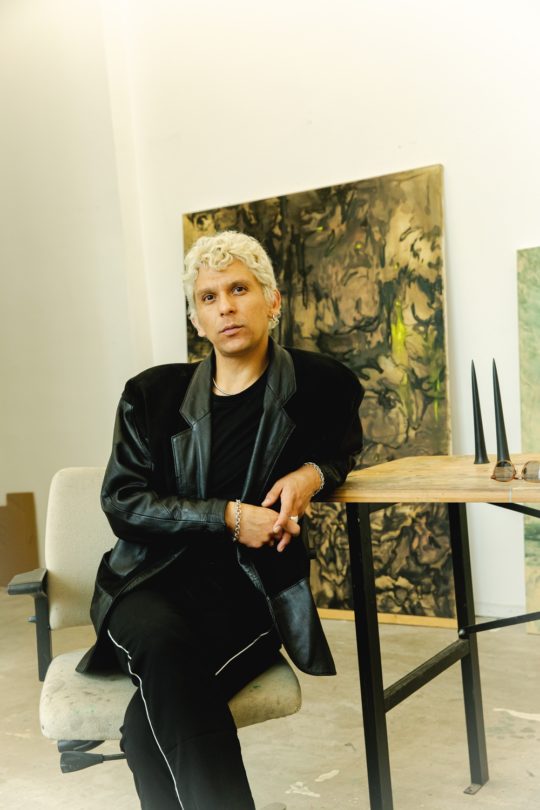
Tucked inside a nondescript building in Berlin’s Mitte district, above a cluster of medical practices, one might be surprised to find the sun-soaked studio of Irving Ramó. Once an exhibition space, the rooms now breathe with creative urgency. Large canvases lean against the walls, their surfaces are alive with tension, twisted limbs, theatrical shadows, and vivid colors that veil something darker. The scent of oil paint clings to the air. At the center of it all stands Ramó himself, surrounded by fragments of unfinished ideas: drawings, mementos, a tangle of cables from 3D scanning equipment, and a half-sipped coffee.
Ramó often references the Baroque, not just in style but in spirit.
“There’s a term: moto e azione,” he says. “It’s about grabbing movement and emotion at their most vivid. That’s what I want to do.”
Born in Quito, Ecuador, Ramó has painted since childhood, though his path to becoming an artist wasn’t linear. “It was almost too obvious,” he recalls. The idea of being a painter arrived early, but I resisted it.” He initially studied industrial design, drawn to the tension between creativity and functionality. But design could only hold him for so long. His desire to evoke emotion and craft theatrical moments led him to stage design and lighting and eventually back to painting.
At one point, on his journey to Europe, visa restrictions pushed him to Istanbul, one of the few countries his Ecuadorian passport allowed him to enter without a visa. “That alone was a revelation,” he says. “People from other South American countries could move freely. I couldn’t. That triggered something bigger: a confrontation with colonial residue, access, and erasure.”
During this time of upheaval, painting became an anchor. Even when he couldn’t physically paint, he collected images and stored references, maintaining the practice in a different form until he could settle again. Irving Ramó’s work is unmistakable today: baroque, emotionally charged, and rich with layered symbolism.
“I use color as a mediator,” he explains. “My themes are often uncomfortable, power, control, displacement, but the palette makes it digestible.” His creative process is rarely impulsive.
“Everything comes from the research part, followed by a confrontation with the canvas,” he says. “There’s always a conversation with older works, and then something new emerges.” Sometimes, it begins intuitively, a visual fragment demanding to be painted. Other times, it starts digitally, with a 3D scan modeled and transformed before it ever reaches the canvas. “It depends,” he shrugs. “But I’m always in conversation with something else. The work is never isolated.”
Berlin has deepened that dialogue, though not without friction. “The city is demanding,” Ramó says. “Every day is survival, training, contradiction.” He calls Berlin a “laboratory of humans,” constant friction of love and fatigue, intensity and intimacy. That energy seeps into the work, its urgency, its theatricality. “There’s something visceral here,” he adds. “And I think my paintings have become more precise and honest, more urgent because of that.”
In addition to painting, Ramó co-founded the Ventana Project with artist Aquiles Jarrin, a curatorial initiative that began almost accidentally from a restaurant window. “They asked if I wanted to hang my work,” he recalls. “I said no thank you. But I offered to curate others instead.”
Ventana reimagines public and everyday spaces, storefronts, and subway stations as accessible contemporary galleries. It showcases emerging local and international artists, fostering spontaneous encounters and dialogue by occupying locations like Rosenthaler Straße, Mehringdamm, Alt-Tempelhof U-Bahn, and most recently, Gesundbrunnen U8-Bahn. Ventana blurs the line between art institutions and urban life, encouraging reflection, community exchange, and unexpected engagement with contemporary work. Ramó is excited that the project is now expanding to Madrid. What began informally grew quickly.
“We flipped the script,” he says. “We brought emerging and established artists into public spaces, into the everyday.” He now sees curation as deeply entwined with his practice. Being close to other artists’ work, especially those I admire, shapes me. It influences how I think and how I create. You see how others build their ecosystems, how they wrestle with meaning.
That influences how I question my work.” Ventana, he adds, is more than a gallery. “It’s a way of learning, of being in dialogue. Of building something that extends beyond the self.”
Time is a recurring motif in Ramó’s work, not just as a theme but as a material. “I work to create an efficient image of the time I am working in whilst also trying to trigger something in the now,” he says. “But I insist. I repeat. I revisit themes because I think we forget too easily.” His paintings contain historical echoes, power, displacement, and ritual symbols. “We repeat the same patterns again and again,” he continues. “From the caves to now, it’s all cycles. Someone is trying to take someone else’s space.” For Ramó, painting becomes a form of resistance to that forgetting. “It’s how I insist. How I remember.” He smiles when asked what he hopes future viewers might take from his work: “To be a bridge through time.”
As our conversation winds down, Ramó reflects on what lies ahead. “Well… Ventana is expanding. I’m painting again, a new body of work. But mostly, I’m adapting.” If one theme defines his recent years, it’s adaptability. “Since arriving here, I haven’t stopped trying to become the character I wanted to be on this trip,” he reflects. The reality is intense between curating, painting, and navigating systems as a non-EU artist. “But the unknown, this unstable zone, is where the richest material lives. It teaches you to build new languages. To create anyway.”