
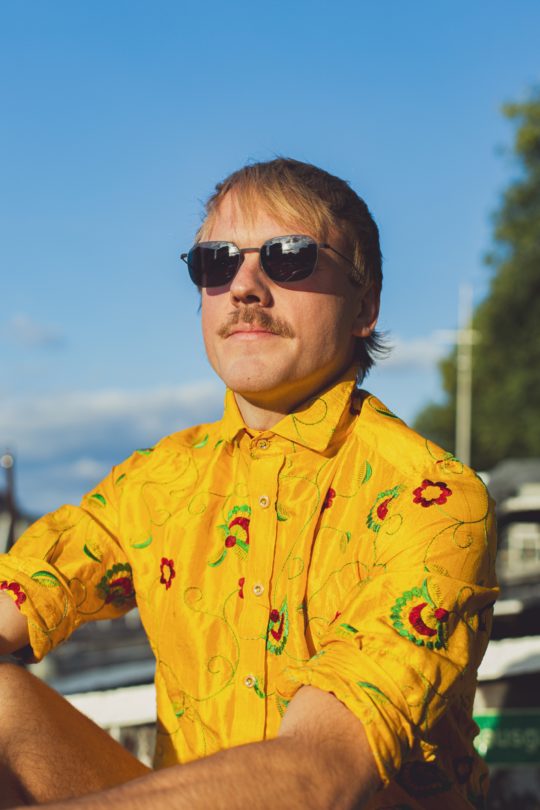
NAVIGATING BERLIN’S ART SCENE ON PETR HOŠEK’S GALLERY BOAT

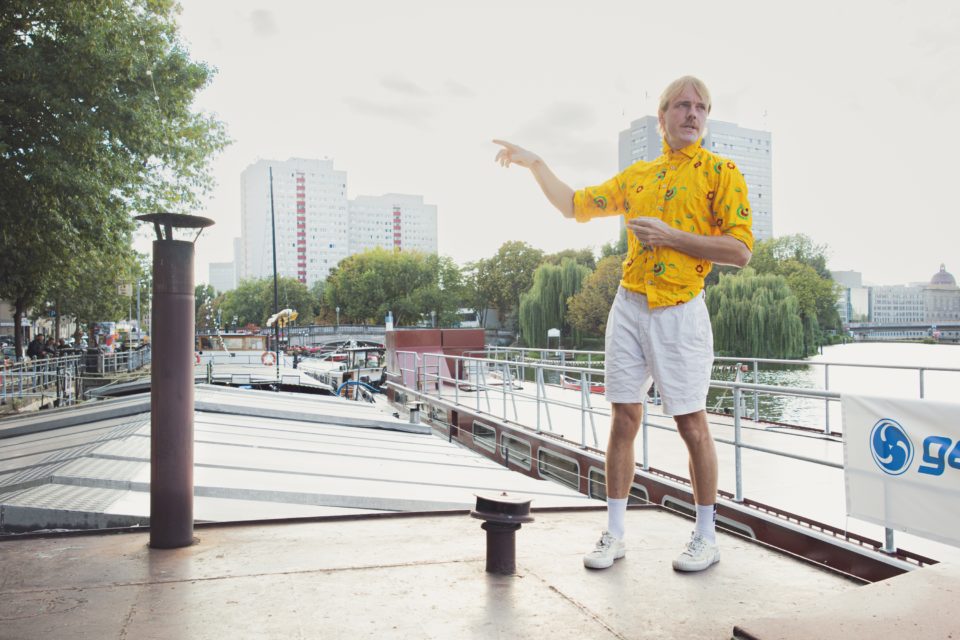
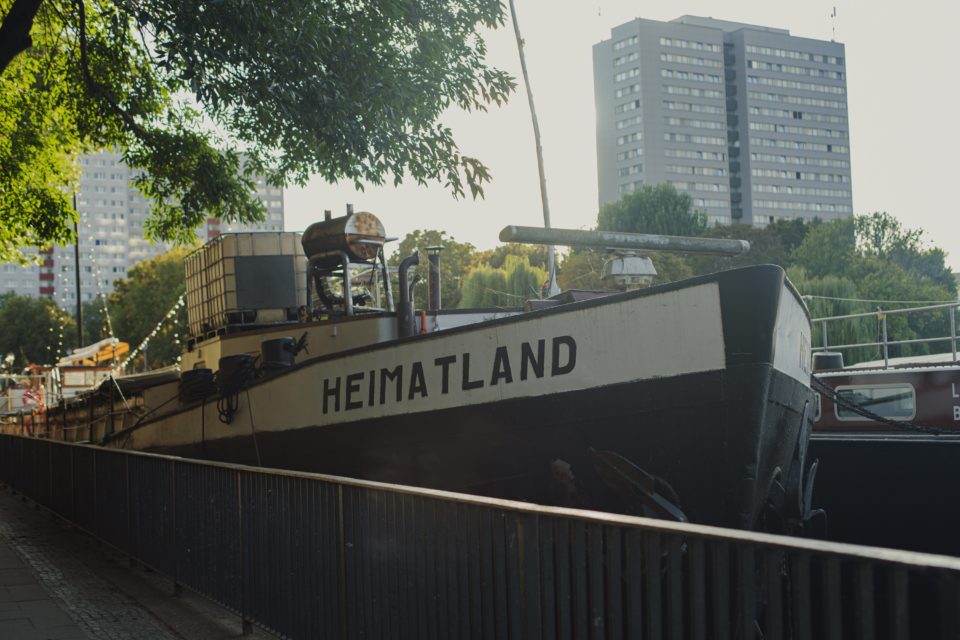
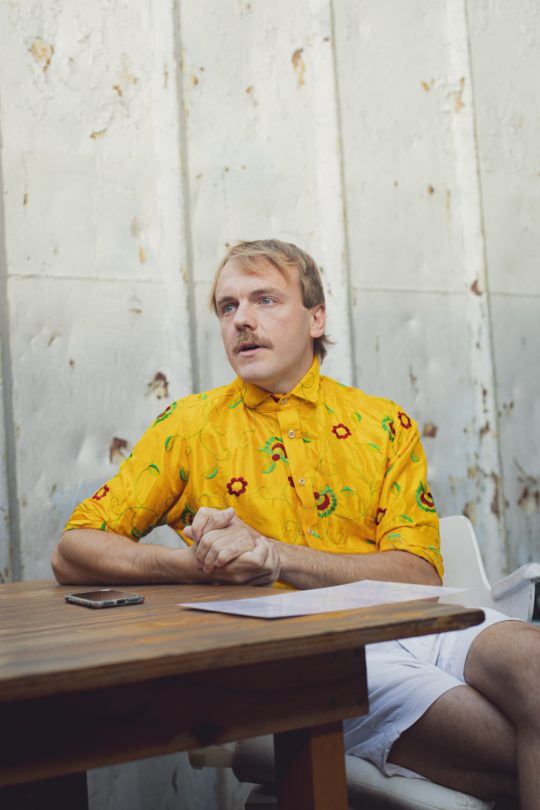
Think of an art gallery and a familiar image comes to mind: a white cube flooded with light, high ceilings, polished concrete floors, an uncluttered backdrop. The kind of space so silent you could hear a pin drop. But this is not where we meet Petr Hošek, Berlin-based art historian from Prague. Instead, the co-founder of Hošek Contemporary runs his private gallery and performance space on a century-old ship permanently docked on the Spree at Märkisches Ufer.
Before we sit down, he pushes open the roof. Sirens wail, a hammer clangs against metal from a neighboring boat, and the city floods in. Hošek grins. “That’s the harbor, you know. There is always something going on.”
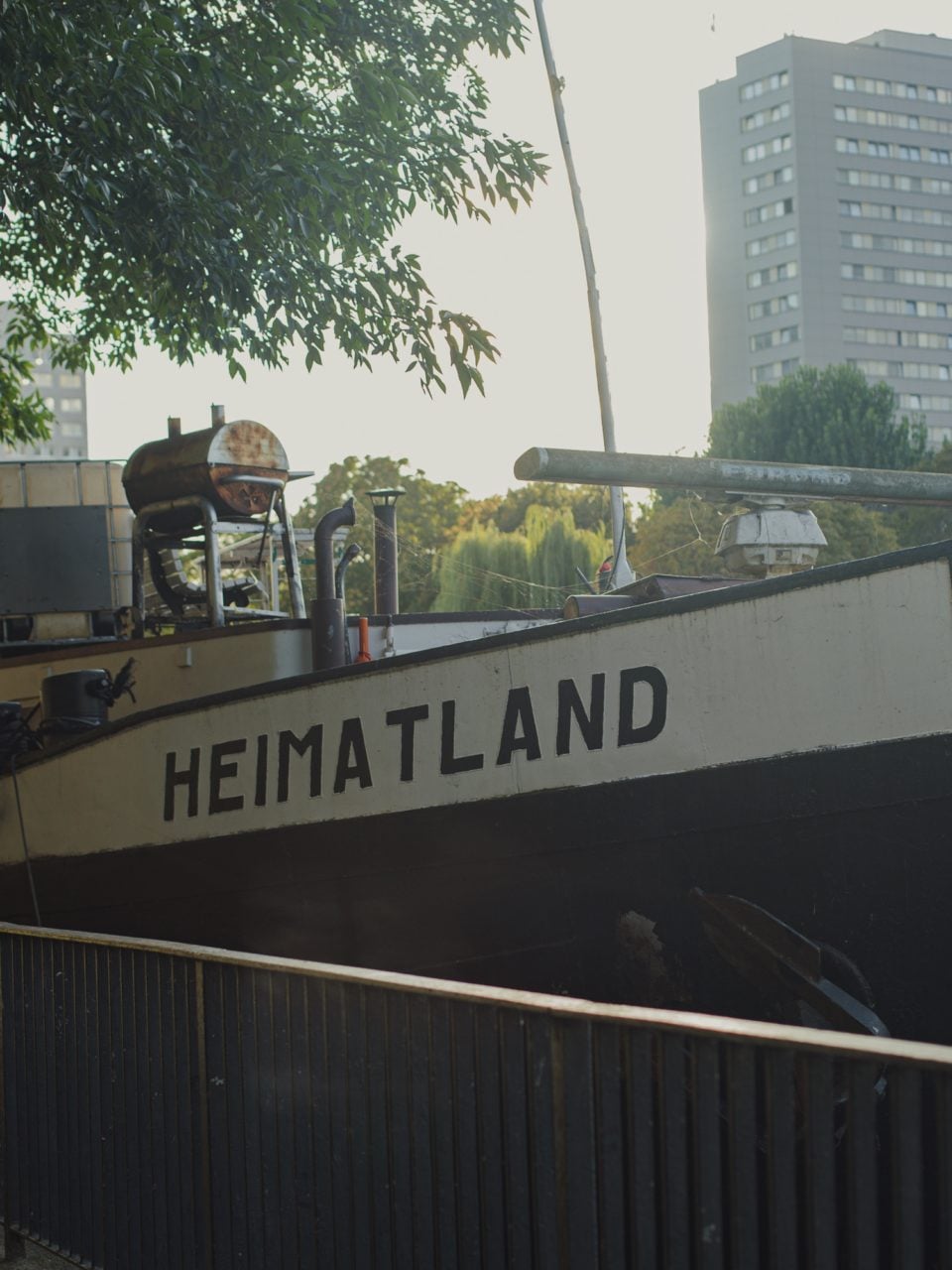
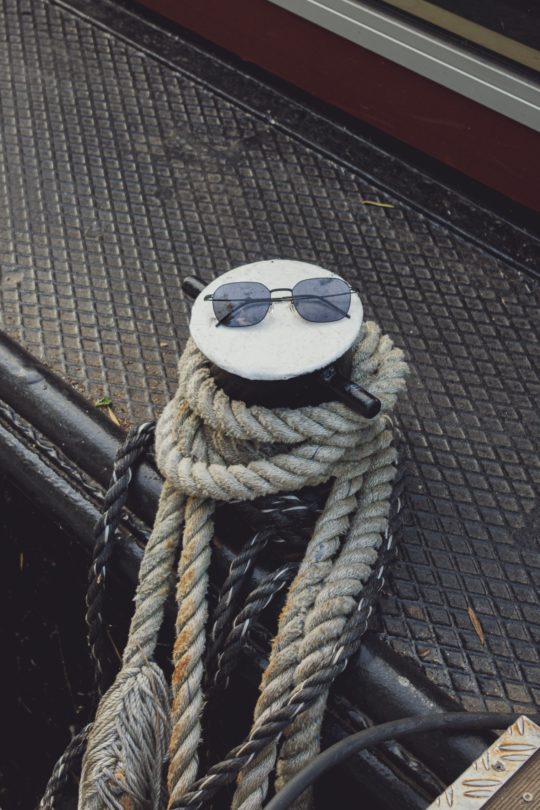
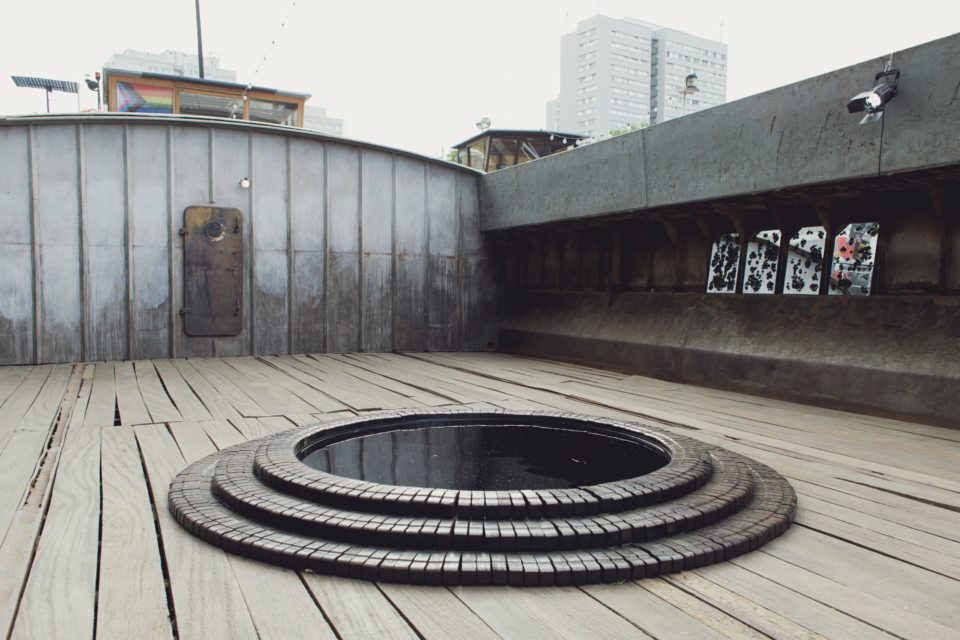
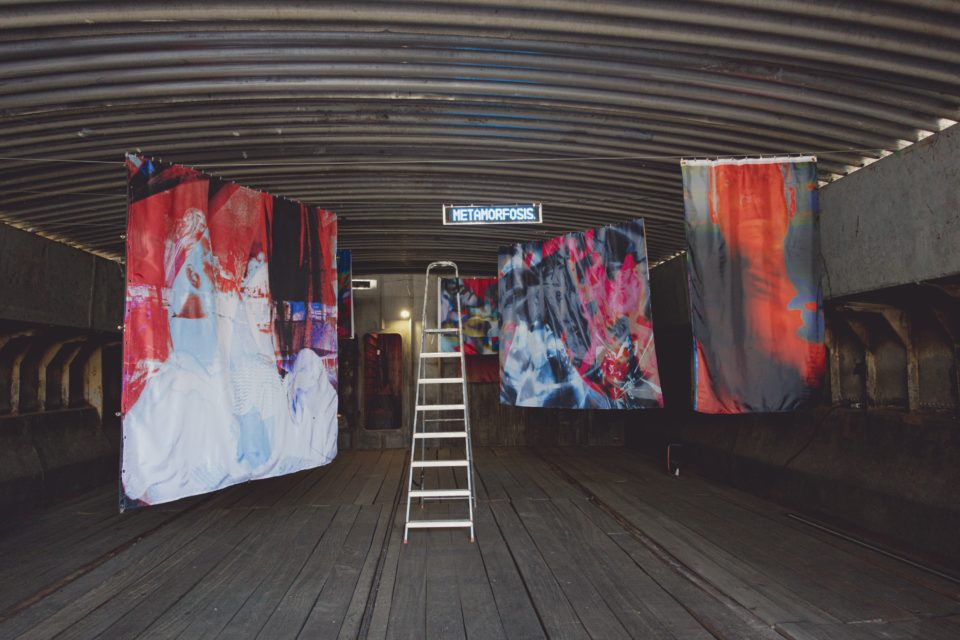
The ship itself, a 58-meter vessel called MS Heimatland and built in 1910, once hauled coal along the waterways. When Hošek and Linda Toivio, the gallery’s co-founder and co-curator, rented the space from the Historischer Hafen Berlin Association in 2018, they began to reshape it completely. The vast cargo hold became a 100-square-meter theater and a 150-square-meter main gallery. Two sailors’ cabins were converted into apartments, now used for residencies.
Since its official founding in 2016, Hošek Contemporary has developed three strands: a gallery program centered on site-specific installations, an experimental music program, and an artist residency.
There is little in the way of curatorial dogma. Because the gallery is essentially outdoors, fragile media are discouraged, but the main condition is that the work must enter into dialogue with the space itself. “Every artist responds to this differently,” Hošek says, glancing down at the deck. “Some are inspired by the history itself—by the floor, for example. This wood came from a forest in Congo in 1910.”
He recalls a work by Icelandic artist Gunnhildur Hauksdóttir, curated by Toivio. Hauksdóttir removed one of the planks, wrapped it in canvas, and laced it with incense. “You’d walk in and the whole floor was grey, except for this one plank transformed into a white canvas. As you approached, a scent drifted up from it. That was one of my favorite interventions.”
Having curated artists for almost a decade, I ask whether he has noticed any changes in taste and in the way they interact with the space. “I think before, the artists worked more with the fact that the boat was unfinished, that it felt like a work in progress. I think the projects now are a little more ‘polished’ in that sense.”
The majority of the art program is filled through an annual open call in November, the Hošek Contemporary Prize. Around 300 portfolios from all over the world are submitted every year, and from these, three are chosen as what Hošek calls “the main thing of the year.”
“Those are usually the projects we present overlapping Gallery Weekend Berlin at the end of April, then again during Berlin Art Week in September. We also tend to include one dance project in the summer. Beyond that, we try to help to find project funding for 10 to 20 proposals that we really liked but that didn’t make the cut.”
Between 2020 and 2022, many artists turned to themes of solitude in response to the pandemic, a trend Hošek says he hated. “I called them corona projects. It often felt as if the artists had nothing new to say beyond what was already in the news.” Since 2023, however, submissions have become more diverse again.
This year’s winners Xindi and Marque-Lin are collaborating with Elif Soğuksu for their exhibition White Gold, Rubber Fever, opening on September 12, just in time for Berlin Art Week, and running until 27 September. Through poetry, documentary field footage in Southeast Asia, and sonic practices, it traces the history of rubber as a commodity and its exploitation under colonialism.
“There will be workshops, performances, a sound installation, and videos, so it’s going to be very interactive,” Hošek says.
For their music program, the gallery generally hosts weekly improvised music sets, providing international musicians an opportunity to showcase their sound skills to a Berlin audience. The events gravitate towards experimental sound, which Hošek admits can be challenging or even unpleasant at first.
“It’s very atonal, cacophonic, and disharmonic, but that doesn’t say anything about its quality. Once you start listening to experimental music, there’s no way back. The moment you accept a certain sound as something worth experiencing as an audience, your perception expands dramatically.”
Petr Hošek’s curiosity didn’t appear overnight. Even as a teenager, he gravitated towards the unconventional, choosing paths far from those of his peers. Growing up in Příbram, a town of just 35,000, he first encountered art thanks to his grandmother, who would often take him to the local gallery on Sundays. “They would exhibit local painters, landscape artists, and photographers, which is how I became interested in art.”
While most classmates went on to study something practical, Hošek trained in art history and theory in Prague and Madrid. After a curatorial residency in New York, he collaborated with the Prague-based gallery Futura and later co-founded Gallery Plevel, which showcased online art in a refurbished 19th-century industrial building. In 2014, he turned his focus to performance art and moved to Berlin, which felt like the ideal place to pursue it.
“Back then, rents were lower, everything was more affordable, and it was much easier to just open a space, make art, invite people, and experiment,” Hošek recalls.
He brings up an interview with architect David Chipperfield, who renovated the Neues Museum. “He said that in Berlin, you just walk down from your flat in Neukölln, put up a hanging rack, and suddenly a secondhand shop is born. That kind of spontaneity is impossible anywhere else,” Hošek explains. “But this is changing in Berlin too. The process is slower, but it’s happening.”
Until 2019 he says things still felt fairly stable in the city’s art scene, though he noticed more polished white-cube galleries emerging as experimental spaces declined as a result of gentrification. The pandemic, however, hit especially hard: many galleries closed in 2020 and 2021 and never reopened. “We were lucky,” he says, “because our space is partly open air, so we could reopen much sooner than most.”
Looking ahead, Hošek imagines dividing his time between Berlin and Brussels—closer to the Netherlands, where his son lives—using Brussels for a commercially focused showroom while keeping Berlin as a place for experimentation. Recently, he was also offered the chance to purchase the ship, prompting him to launch a fundraising campaign. For now, at least, leaving Berlin isn’t on the table.
“I have no idea what’s going to happen in ten years,” Hošek says. “I love Berlin. I love the creative scene, you don’t find this anywhere else. People keep saying, oh Berlin is dead, Berlin is over. I don’t think so. It’s still attracting a lot of new people. So do our concerts and art exhibitions. As long as people keep coming, I’m happy to stay.”
White Gold, Rubber Fever: September 12-27, 2025
Closing event on Saturday September 27, 2025 at 6 PM
Open Call for Hošek Contemporary Prize 2026: November 4, 2025