
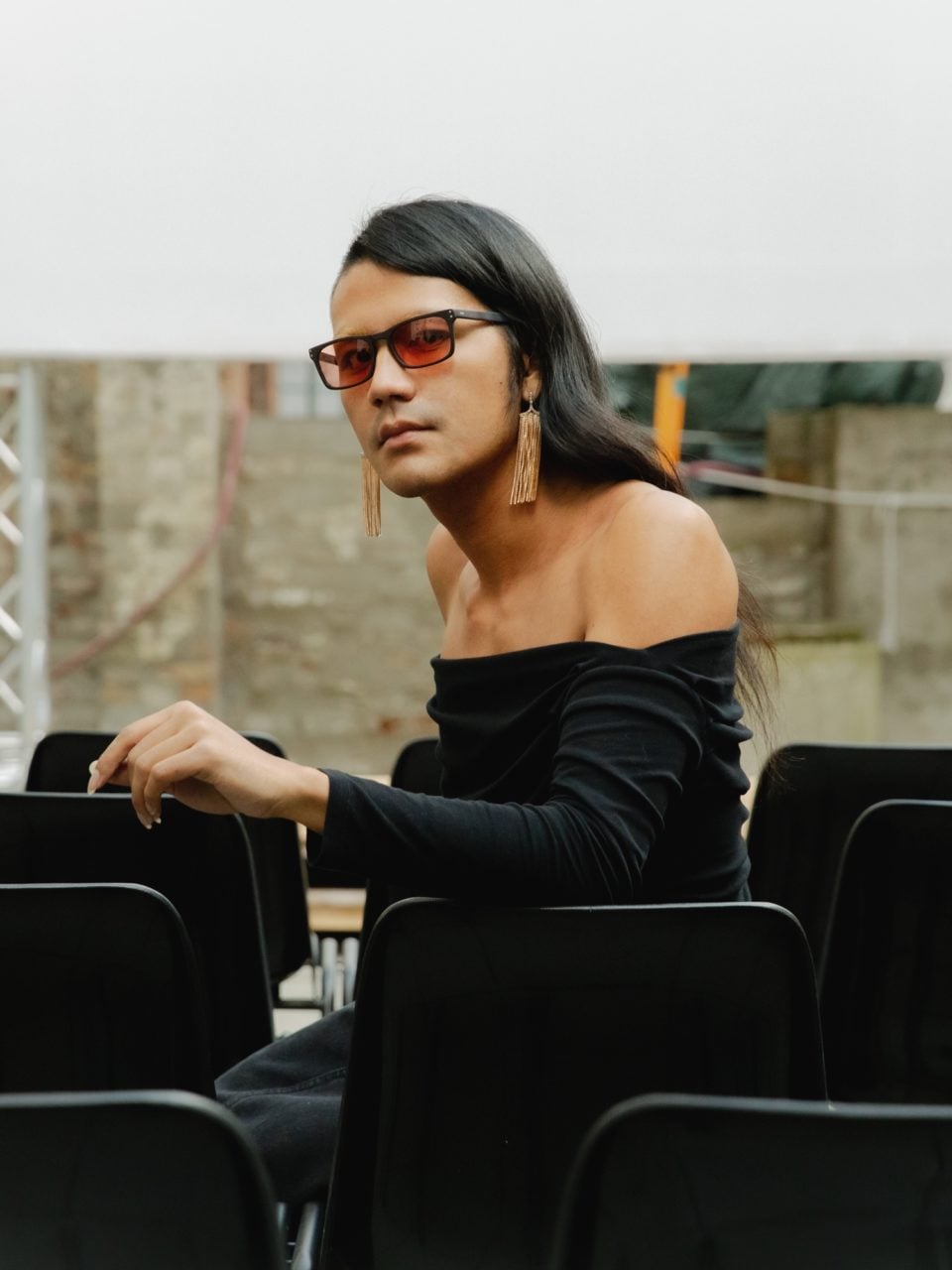

TASTE, TENDERNESS, AND CINEMA WITH SARNT UTAMACHOTE

Walk through Berlin’s Museum Island and you’ll find crowds queuing to see ancient artifacts looted from other continents, or the latest exhibitions featuring celebrated artists flown in from abroad. But the real heart of the city’s cultural landscape often beats elsewhere, in its “kommunale” galleries, underground festivals, and community-run spaces.
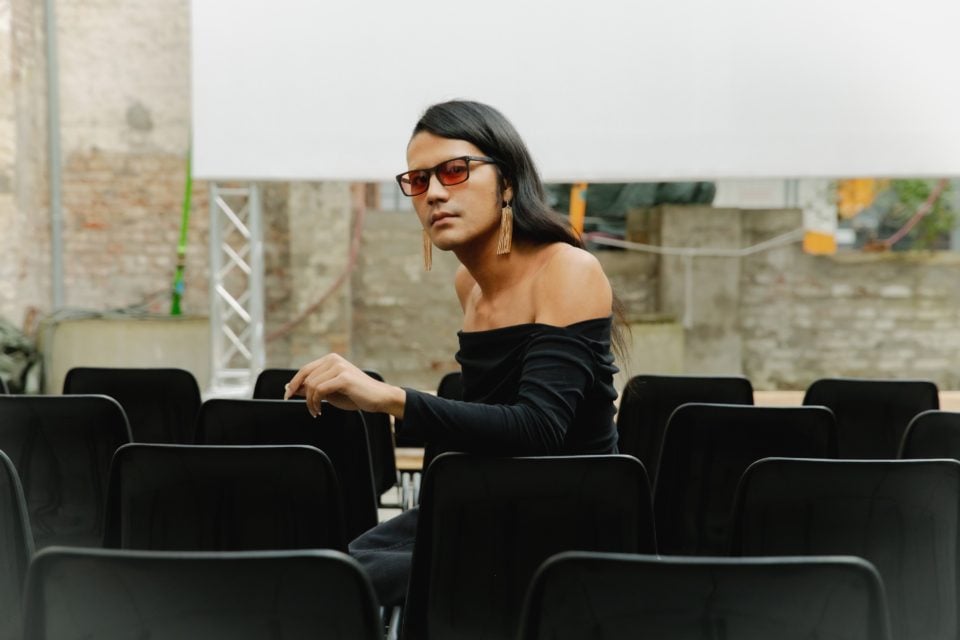
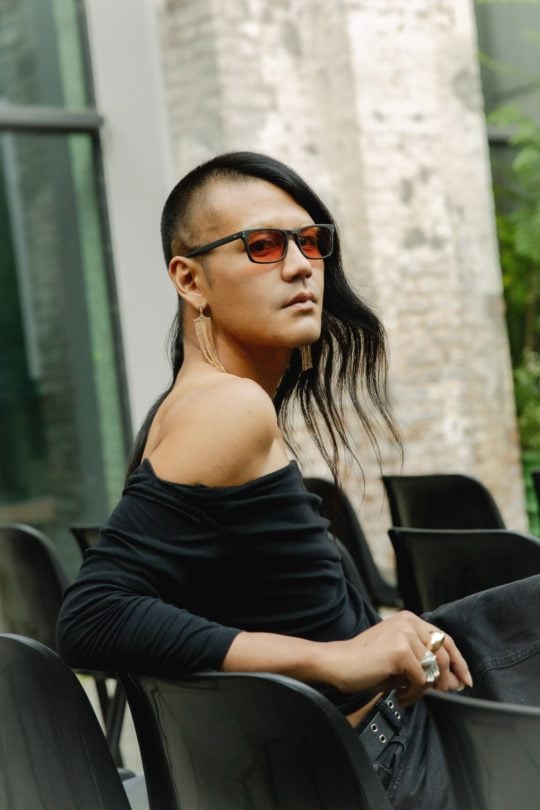
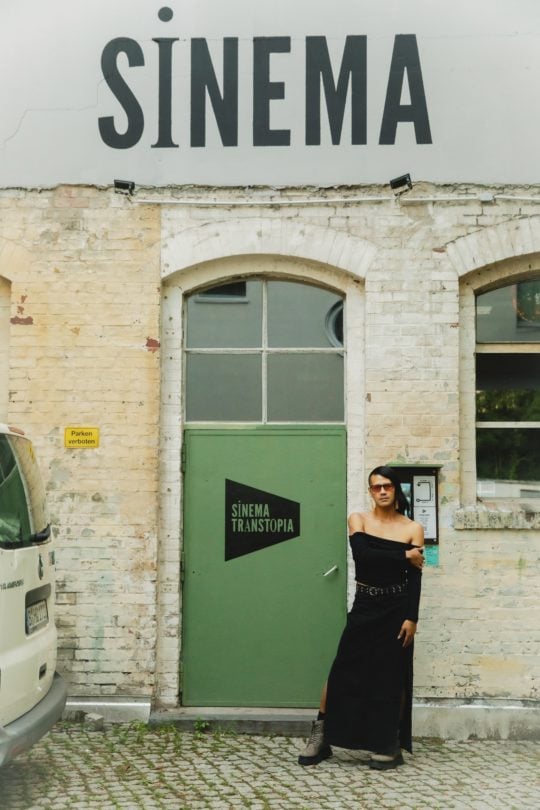
This is where we meet Sarnt Utamachote, a Thai-born filmmaker, curator, and cultural organiser who has spent the past decade reshaping Berlin’s film landscape from the ground up. Through their work with XPOSED Queer Film Festival, Sinema Transtopia, and collaborations with other cities such as the Short Film Festival Hamburg, Sarnt is reimagining what cinema can be, not merely a screen in a popcorn-scented room, but a living, breathing ecology rooted in care, dialogue, and disruption. When Sinema Transtopia first opened its doors in 2020, the ceiling leaked rain during a screening of Railway Sleepers (2016), an almost poetic accident, perfectly echoing the film’s quiet meditations on transience and movement.
Their approach to cinema is both intellectual and instinctive, rooted in a philosophy that merges care, collectivity, and curiosity.
“Taste,” Sarnt says, “is what you allow to go inside you, what you allow to change you.”
For them, taste is not just aesthetic. It is emotional, ethical, and political. It determines which stories we let in, and which we leave outside. In Thai, as in many Southeast Asian languages, the word for taste could share a Sanskrit root with “feeling”, a reminder that taste is as much about the body as it is about the mind. This sensibility is inherent in all their work, building film programmes that invite audiences not just to watch, but to feel, reflect, and sometimes confront.
Sarnt’s journey to Berlin was less a planned pilgrimage than a leap into the unknown. “I worked in fashion in Bangkok. I hated it,” they recall with a laugh. “Back then, Berlin was cheap. I could rent a room for €300 a month, cheaper than Bangkok. I didn’t even know what Berghain was. I just wanted to start over.”
Their early creative life was shaped by design school, a compromise with parents who, like many in the global south, would not allow a child to “just study art”. Film arrived on the periphery, through student clubs and underground screenings, some of which collided with international politics. “I remember an Iranian lesbian film, Circumstance (2011) was to be screened at Chulalongkorn University Film Club, and the Iranian embassy came to stop the screening. That was when I realised: cinema is not just entertainment. It’s politics.”
When they arrived in Berlin in 2014, they applied to every film school they could find. All rejected them. Rather than give up, Sarnt picked up a camera anyway, learning the craft in living rooms, borrowed studios, and among friends. That act, creating without institutional permission, felt like rebellion, and it forged a philosophy they carry into their curatorial work today.
“Cinema is no longer just about the screen,” Sarnt says. “It’s about the world around it, who watches it, where, and why.”
They describe curating as building an ecology, a living network of films, communities, conversations, and moments of collision. Sometimes a programme begins with a single film; sometimes it begins with a rumour overheard in a market or a conversation in a darkroom even. Sarnt’s work thrives in collectivity.
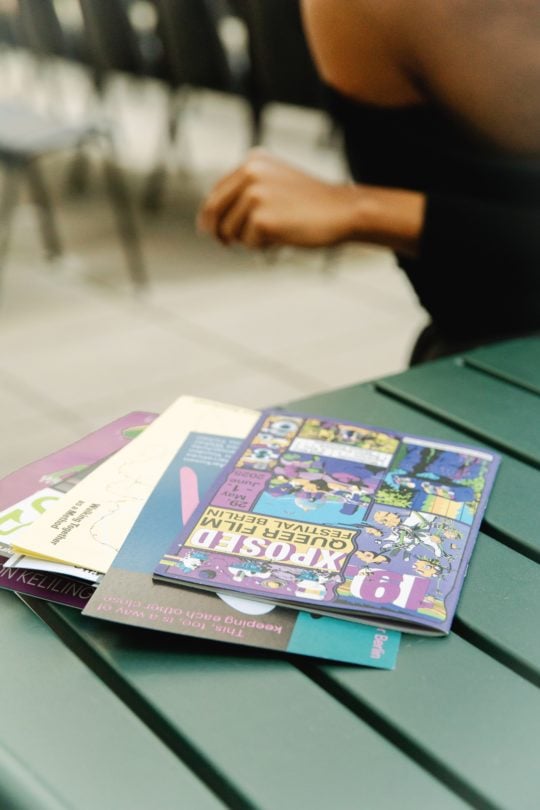
XPOSED, Berlin’s fiercely independent queer film festival, is everything a commercial queer festival is not: politically rigorous, discursive, and dedicated to films, both short and feature, that push the boundaries of form and content.
“Queer cinema can’t just be ‘queer people on screen’ anymore,” they explain. “It has to mean anti-colonial justice, disability justice, a bigger ecology of care.”
Sinema Transtopia, meanwhile, is a space for post-migrant and diasporic perspectives, giving visibility to films that are often politically uncomfortable or under-seen. Once housed in a former DDR building and now in Wedding, it has become a gathering place for audiences hungry for cinema that talks back to history. Screenings are rarely passive; they are accompanied by discussions, debates, and moments of collective reflection.
This ethos is what Sarnt calls curatorial taste, a filter that is always in flux. “Taste is your first reaction,” they say. “If it’s good, you swallow. If not, you spit. But taste can also stop you from experiencing something new. You have to keep opening it up.” After years of programming, Sarnt has watched Berlin audiences evolve. There is a growing demand for accessibility, intersectional narratives, and conversations that extend beyond the screen.
“Older filmmakers complain that cinema is too politicised now,” they laugh. “I’m like, it’s always been political. Europe had colonies for 500 years. Cinema has never been unpolitical.” This frankness is matched by a love of contradiction. Sarnt delights in guilty pleasures, happily confessing their enduring love for Pocahontas, despite its colonial fantasy, alongside the meditative films of Greek auteur Theo Angelopoulos, Thai queer cinema, and Japanese animation. “Only animation can make dying look beautiful,” they say, recalling Grave of the Fireflies. “You can’t achieve that tenderness in live action.”
This year, Sarnt is preparing a sound and video installation for Berlin’s Museum of Asian Art, exploring trans futures and reproductive imagination. The work, like much of their practice, reflects the layered experience of diasporic life in Europe, and the tension between visibility and marginalisation. “Stop importing,” they say. “The artists you look for are already here. We’re here.” They’re not speaking against the value of international exchange, far from it. But their point is clear: while major institutions often highlight global artists from afar, those living and working right here in Berlin, migrant, queer, working-class, are frequently overlooked. Even as their work drives real community engagement, they remain underfunded and underrepresented.
It’s a fitting closing note from someone who has spent years weaving together cinema, collectivity, and care into an artistic practice that insists on presence and on paying attention to the stories already unfolding around us.
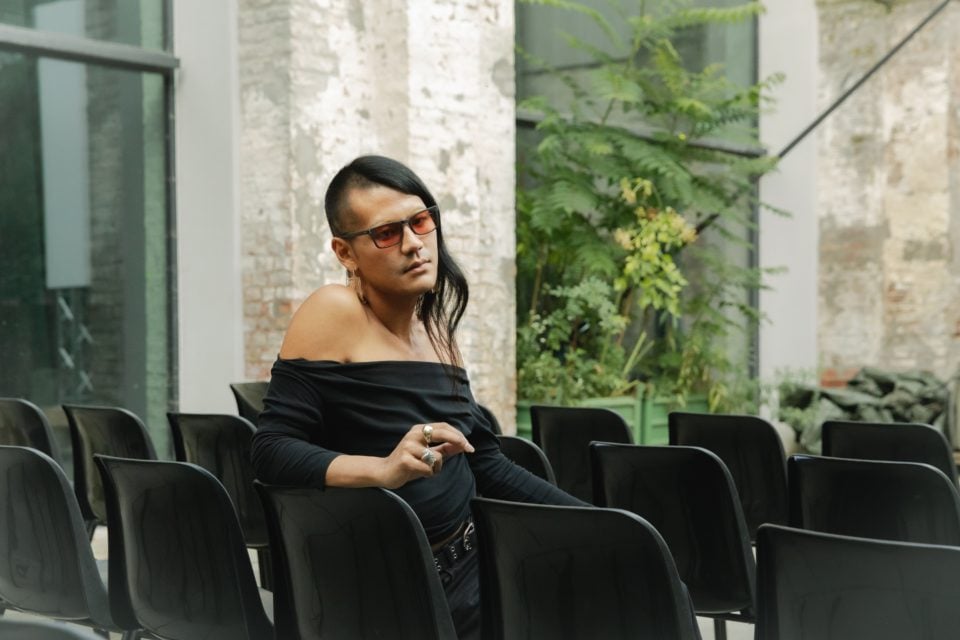
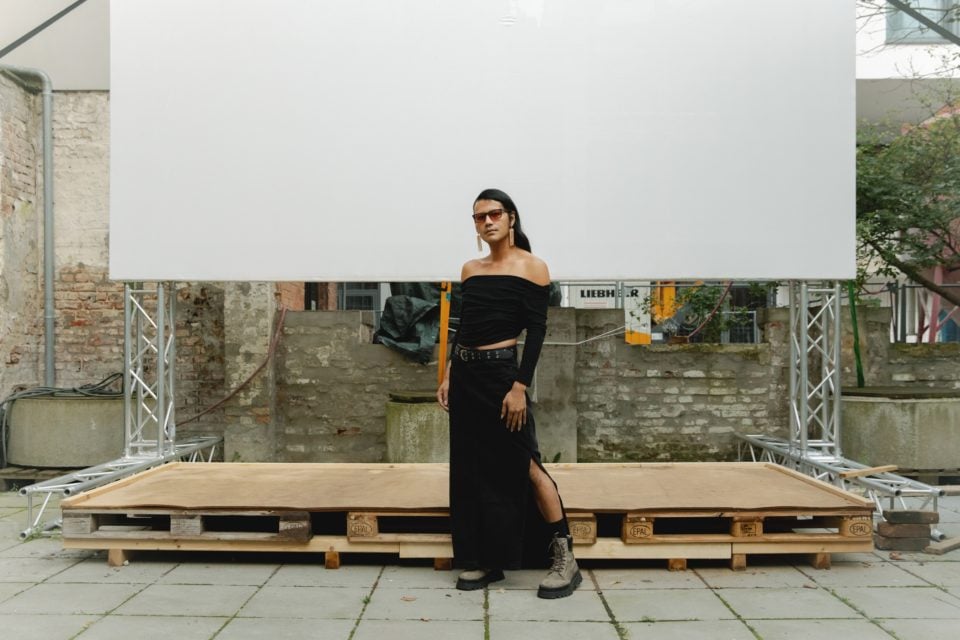
Sarnt wears Tommy in Black with Rapide lenses.
Sarnt’s Top Film Recommendations
- All About Lily Chou Chou (2001)
- The Piano (1993)
- Trilogy: The Weeping Meadow (2004)
- Mommy (2014)
- A Single Man (2009)
Sarnt’s Guilty Pleasures
- The Adventures of Priscilla, Queen of the Desert (1994)
- Pocahontas (1995)