
ONE YEAR OF BERLIN’S CELEBRATED RESTAURANT STOKE
A Conversation with Jeff Claudio and Jessica Tan

A Conversation with Jeff Claudio and Jessica Tan
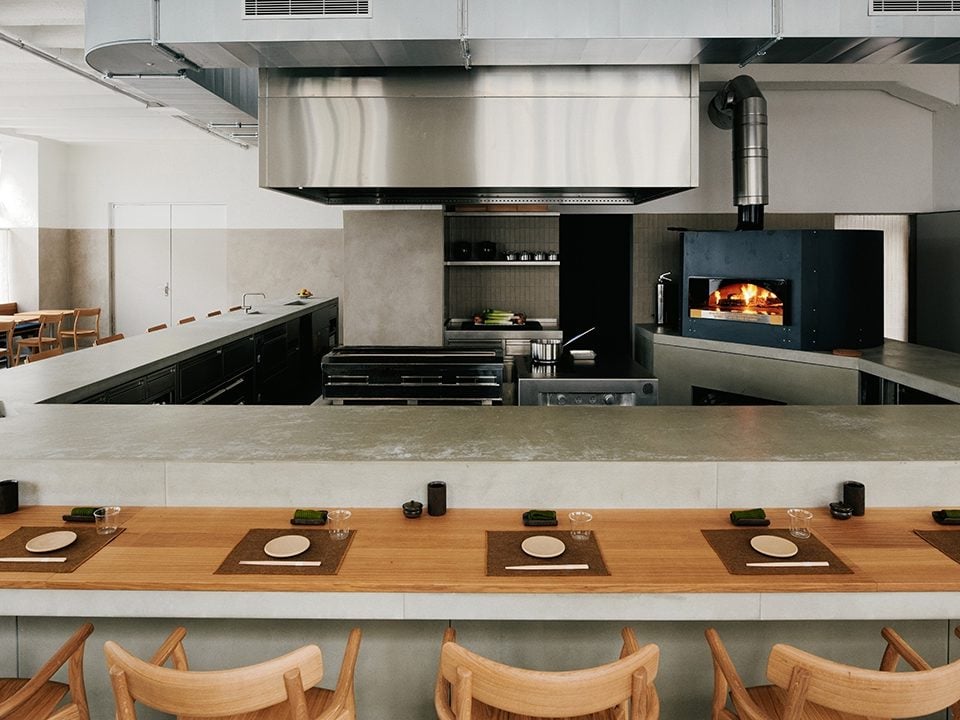
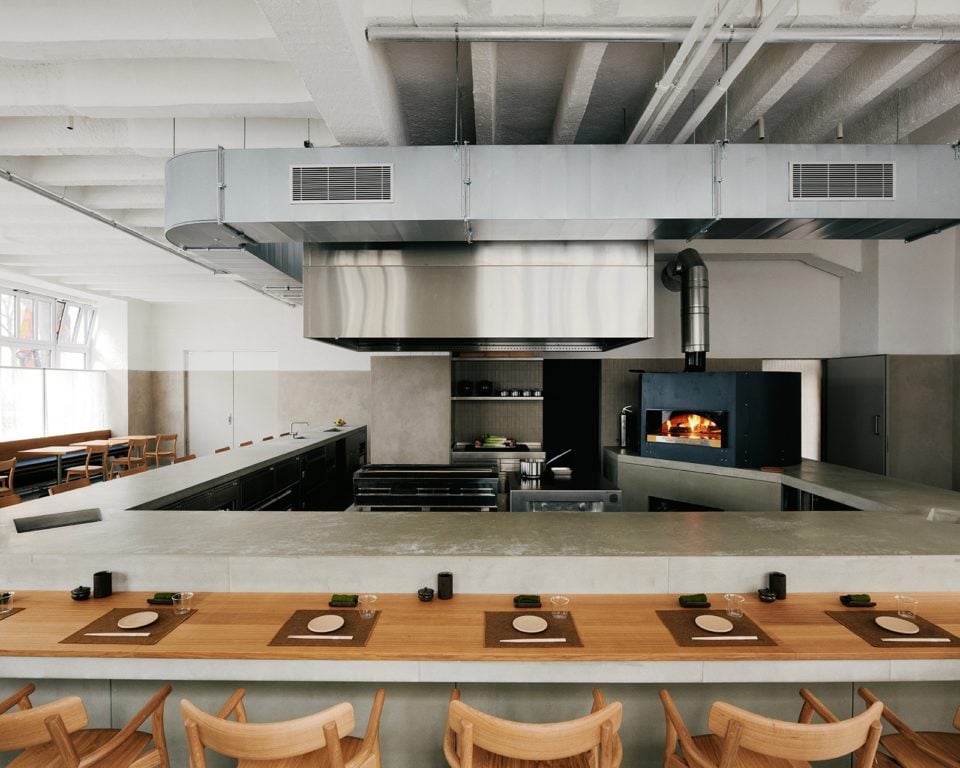
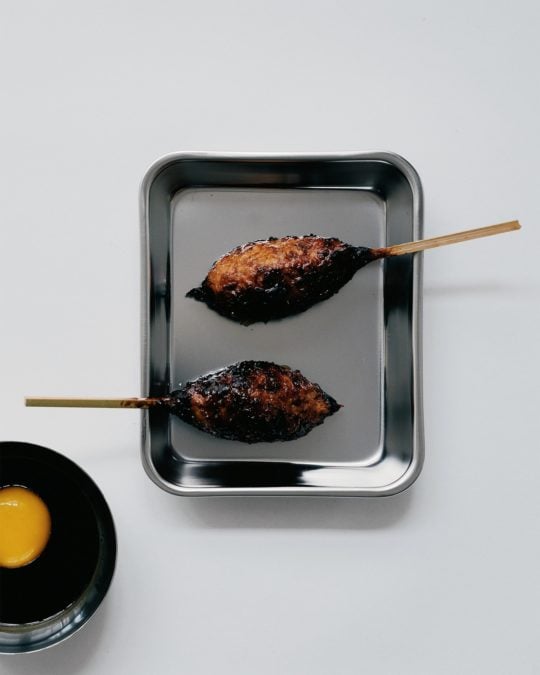
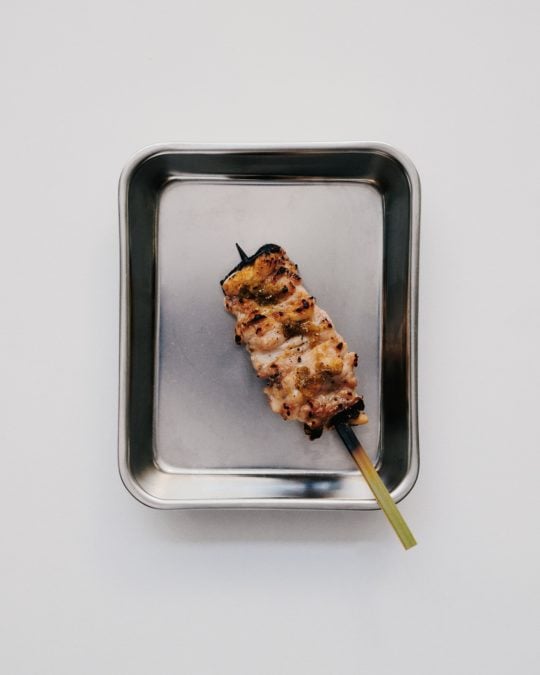
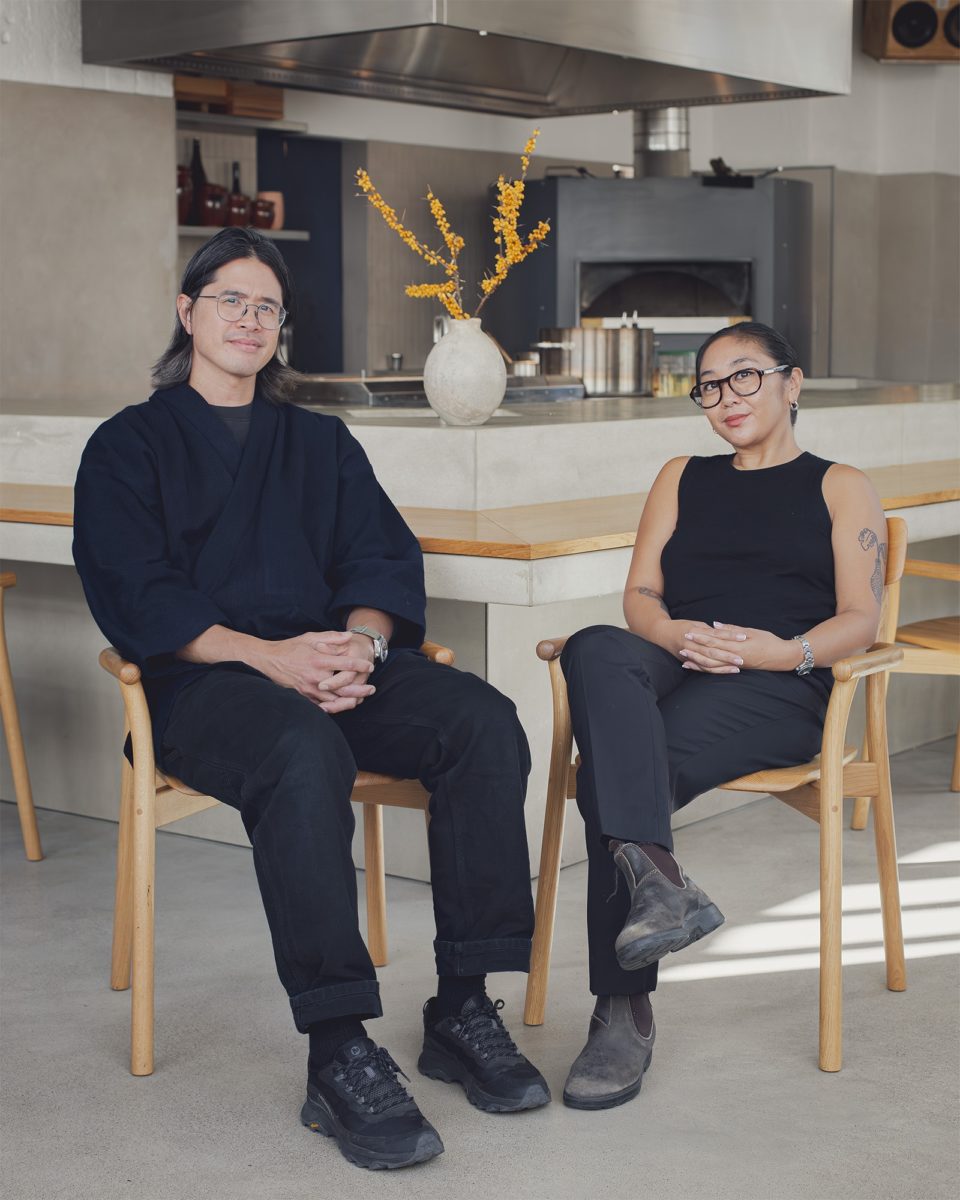
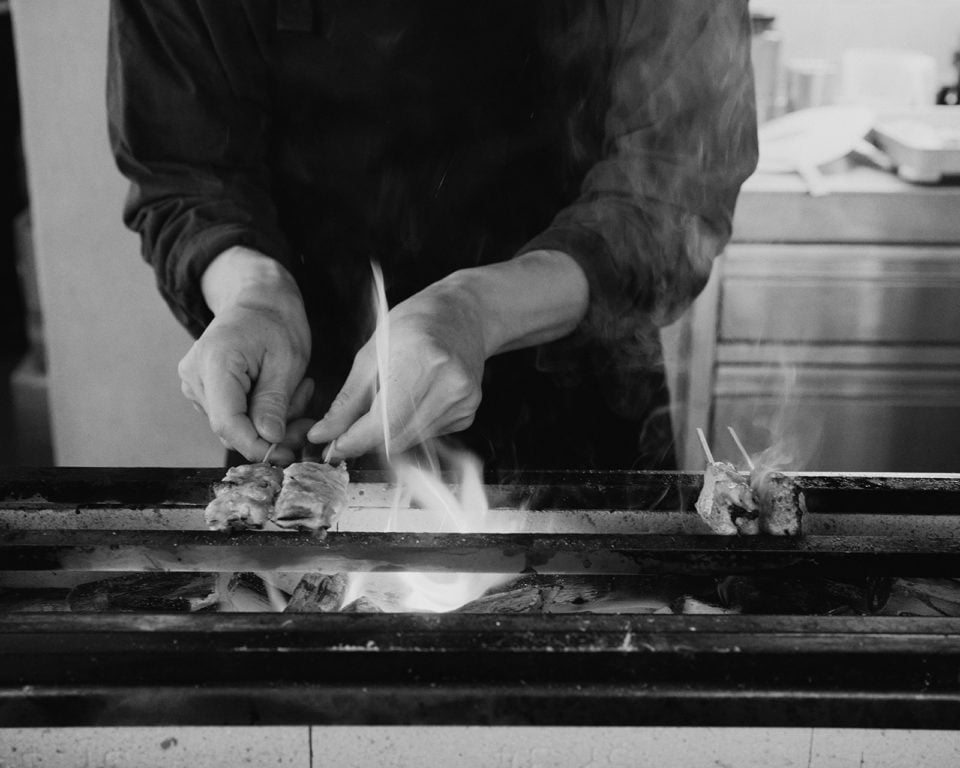
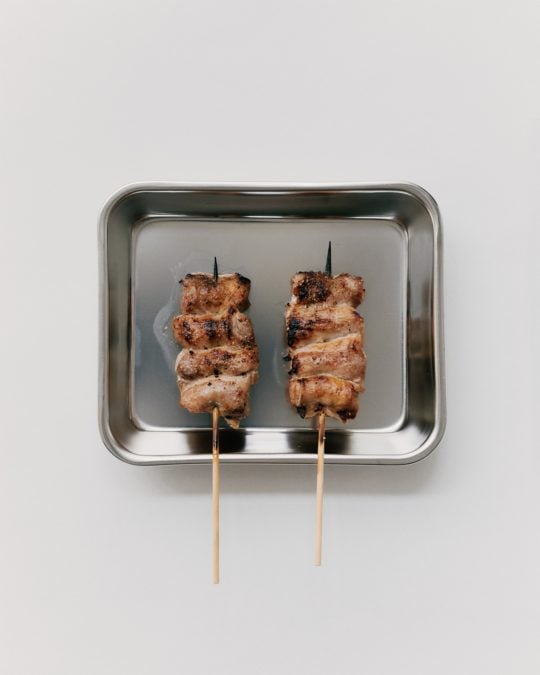
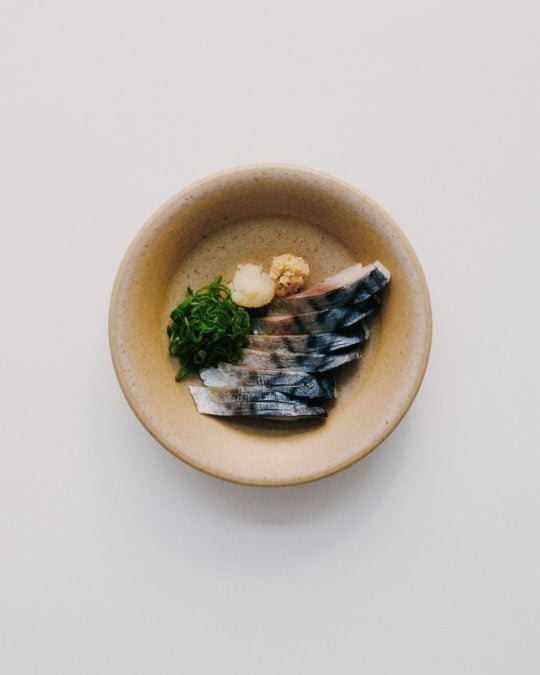
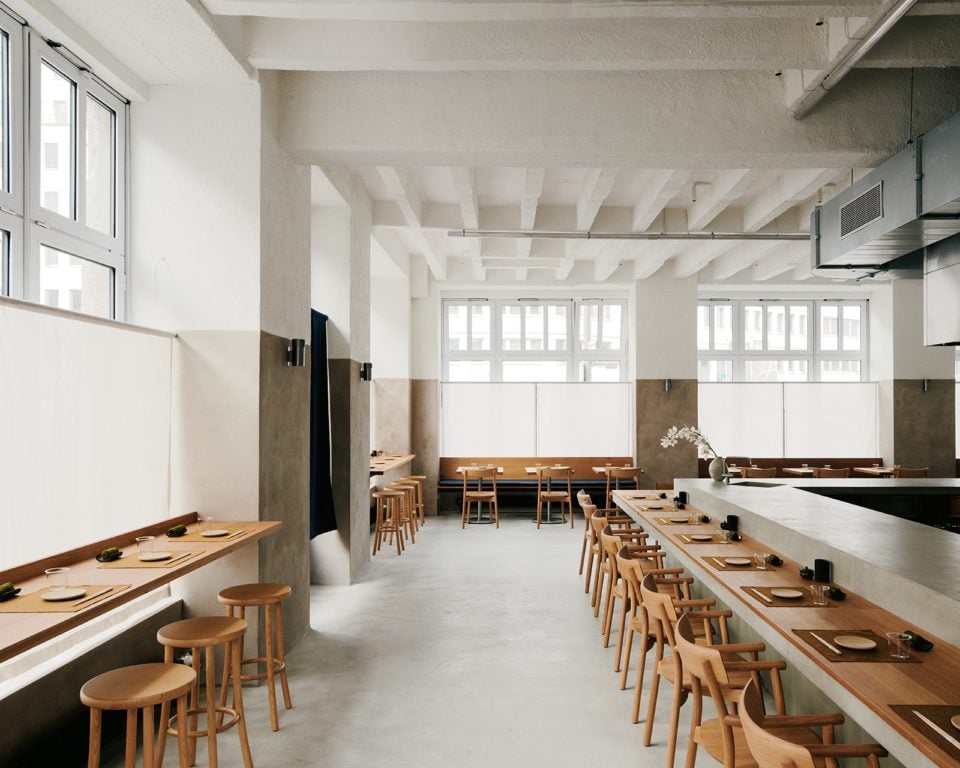
A year ago, Jeff Claudio, Niklas Harmse, and Jessica Tan opened Stoke, a restaurant centered on yakitori—Japanese charcoal-grilled chicken. Stoke is an L-shaped dining space with a wraparound bar and banquette seating, all oriented toward the grill. While seated in the prime location closest to the grill, guests watch as the chefs present dish-by-dish, setting exquisite offerings along the edge of the bar. The dishes are straightforward, with reduced elements that complement the highlight of the menu: the fourteen different parts of the chicken, each served as an individual skewer.
Jeff Claudio, head chef, was recently awarded “Rising Star of the Year” by the Berliner Meisterköche. Although Stoke is new to Berlin, Claudio spent years leading teams at high profile restaurants around the world. He constructs his menus with precision and creativity. Drawing on her background in art direction and fine-dining, Jessica Tan leads the hosting and plays a key role in the restaurant’s operations. Their team is made up of energetic talent with experience at some of Berlin’s most exciting restaurants.
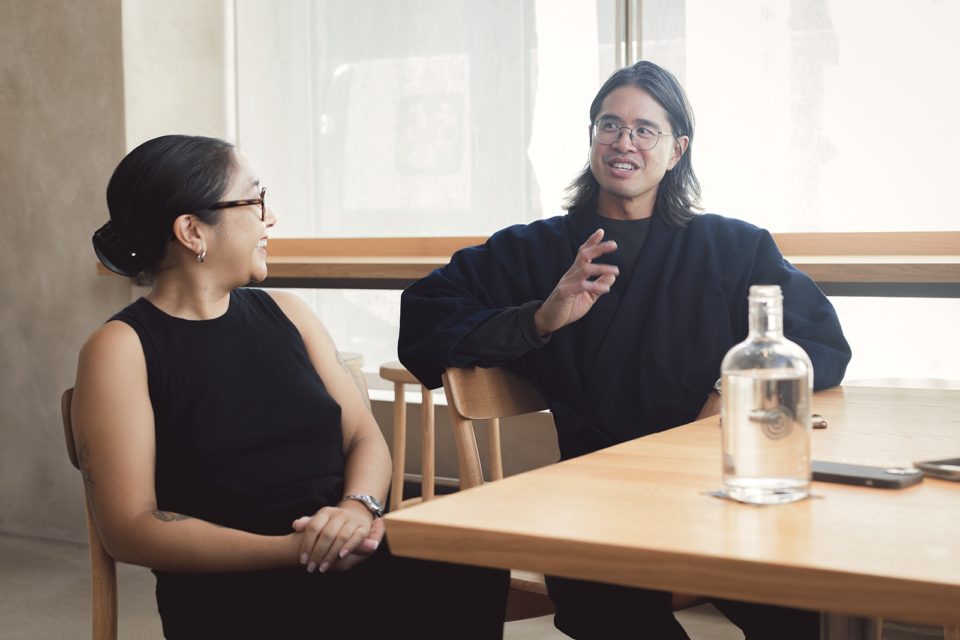
I met Tan and Claudio one morning at their restaurant near Potsdamer Platz, their team already busy prepping for dinner service. Built in 1911–12, the building first served as a department store and is under Denkmalschutz (historic preservation), meaning any alterations require rigorous approval—a process that extended the restaurant’s interior construction by several years.
Anticipation for Stoke had been building in part because of their Torikabin project (2023), a pop-up restaurant in the truest sense: a wooden cabin assembled on the roof of Aufbau Haus near Moritzplatz, not far from where the restaurant was being constructed.
KATHARINE WIMETT: I want to start with Torikabin, which was a really clever way to get around German bureaucracy and some of the construction issues you were facing before moving into this current space.
JEFF CLAUDIO: Torikabin came out of pure frustration. We learned there was really no end in sight for finishing this space. We received the timeline for construction and it was exceeding a year, and we realized we needed to do something. Here’s the thing—within Jess and I’s work relationship, I have these thoughts…
JESSICA TAN: You mean… crazy ideas.
CLAUDIO: They can be pretty outside the box.
TAN: But then when they are possible…
CLAUDIO: Jess can see the vision I may have and be realistic with it. She knows a lot more than I do. Jess is the one who brings things to life, putting ideas into motion. Torikabin was one of those ideas.
TAN: Torikabin was so cowboy. We worked so much; it was a lot of heavy lifting.
WIMETT: Torikabin seemed like such a cozy and intimate space for guests. What were the lessons you brought forward with you for Stoke?
CLAUDIO: We developed a group of engaged guests who consistently dined with us. We want to look after people—to have them feel seen and to leave feeling better than they did before. At Torikabin we really got to bring that to life. And more than anything, we realized the place doesn’t matter. Let’s focus on true hospitality. Even though it’s this wooden cabin on a rooftop, we’re going to make you feel amazing: we’ll feed you, chat with you, and drink with you.
WIMETT: And that priority really speaks to your partnership—the blend of front-of-house and back-of-house.
CLAUDIO: Right. The space really asks that we work together, as there is no physical divide between the front- and back-of-house.
WIMETT: What have you learned so far in this space?
TAN: When something doesn’t work, change it.
WIMETT: You mean like switching from a set menu to à la carte?
TAN: We always knew that was where the menu was going, but it was about the timing.
CLAUDIO: We needed something to stand on. For an opening you need to implement so much all at once, and live in front of guests. So we needed those first three months of a set menu to have our team get to a certain place, and during that time everyone just became more dynamic in their role. For the chefs, not only technical skills like butchery and skewering, but also how to present the food to guests. Consolidating our work load was crucial in the beginning.
WIMETT: It’s remarkable how much dinner service plays out like a performance.
TAN: You’re on stage.
CLAUDIO: We talk a lot about that with the team. The gestures have to be tighter. Even if you’re absolutely melting during service, you have to keep yourself calm and collected at all times.
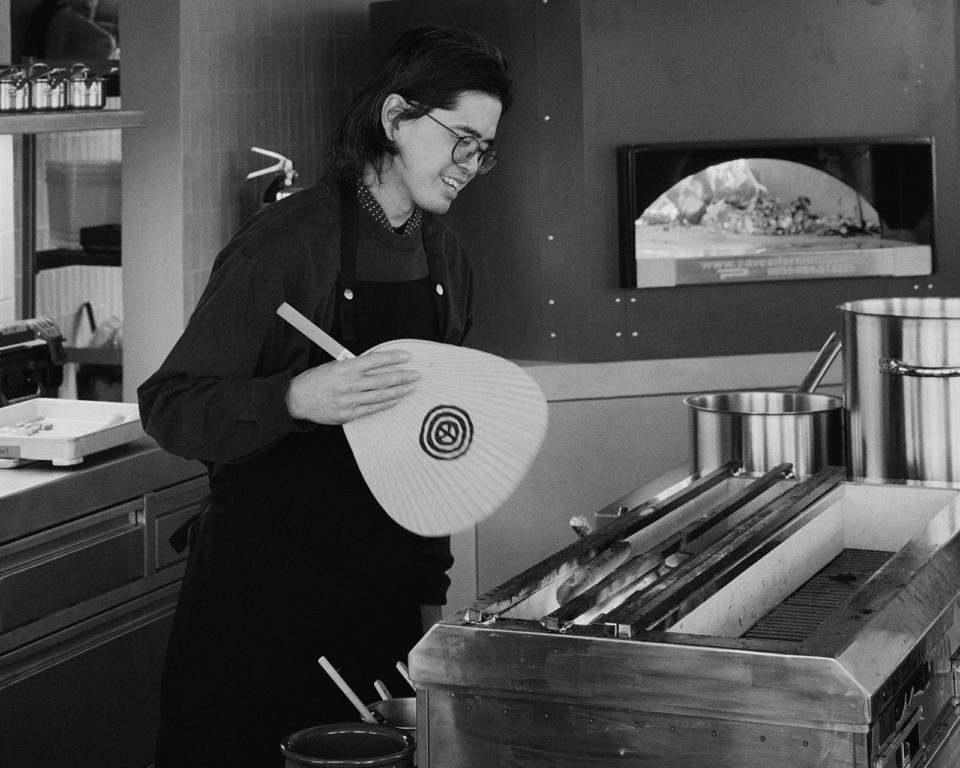
WIMETT: Tell me about the grill.
TAN: It’s the centerpiece and framed by the dining room.
CLAUDIO: The grill is of course something we cook with, but it’s also an important object in the room. It’s mesmerizing to look at fire, especially as the one cooking over the coals. The grill was made by Kama-Asa, a company that works with artisan craftspeople in Japan to produce well-made kitchen tools and equipment.
WIMETT: And to have it be freestanding is very special, right?
CLAUDIO: I learned this working in Hong Kong, where there was limited space. So even in the plans I drew for Stoke in 2016, the grill was always an island that people could work on from both sides.
WIMETT: Jeff, looking at your résumé—specifically your time at Burnt Ends and Yardbird, both Michelin-star restaurants in Asia known for wood-fire cooking—I wonder what attracts you to cooking over fire?
CLAUDIO: I think it’s about taste and simplicity, but also the mastery you need to attain. It’s a type of cooking that can be practiced like a craft, in terms of its repetition.
TAN: It’s also about your skill and intuition.
CLAUDIO: You gravitate toward what interests you in life. The grill pushes you. When I’m teaching the team how to cook with fire, I often say it’s like surfing or golfing—every day you go out there, it’s different. You can’t expect perfect conditions every time. You have to be constantly moving, using your intuition and feeling; there is no recipe. It comes down to a very human touch. That’s why I love it so much. It’s something you choose to do and practice with this mindset.
WIMETT: And Jess, what attracted you to working in fine dining?
TAN: I’ve always been working in the industry. And when I was at a restaurant called Acme (acclaimed Sydney restaurant operating from 2014–2019) I saw a different world within gastronomy. Acme was actually where I first met Jeff, in 2014 or something like that.
WIMETT: And then you worked for Relæ in Copenhagen, correct?
TAN: I learned a lot from Cristian Puglisi. Because it wasn’t just a Michelin-star restaurant—he had a bakery, a pizzeria, and a farm. To see how it all worked together was incredibly inspiring. Everything grew very fast, I think too fast, but it was an amazing experience to work within all those different concepts.
WIMETT: You’ve both led teams before. What’s different about leading your team now that it’s your own restaurant?
CLAUDIO: When it’s your place, you put a lot of emphasis on the people working for you. When you’re working at someone else’s restaurant, the distinction feels more clear: I’m in charge of the kitchen team and what they produce. But now, I’m responsible for everything. We emphasize a good culture amongst the team, how we communicate and treat each other. It is important to me how the team feels in and out of Stoke, everybody has to feel good.
TAN: It’s a holistic feeling. Because it really transfers over to the guests. We have an amazing team and we’re so grateful. When you dine here it should feel effortless because of the strong dynamic—there’s an ease in the air.
WIMETT: What are you excited about on the menu this winter?
CLAUDIO: Yakitori, yakitori, yakitori.
TAN: Chicken!
CLAUDIO: In Kyoto at a restaurant called Monk, they have a dish that never leaves the menu—whatever seasonal vegetables are available are roasted in the wood oven, emphasizing the simplicity of their wood-fire cooking. We want to keep this on the menu as it’s a very nice dish to represent the time of year and have alongside our grilled skewers. We are working with new farmers this year and are trialing new dishes. Also, capons are coming into season; they’re like the wagyu of chickens.
TAN: We also have more collaborations coming up this year.
CLAUDIO: Stoke is truly an expression of Jess, Nik, and myself, our shared vision and the kind of restaurant we would want to eat at.
WIMETT: What kind of expression is cooking for you?
CLAUDIO: It’s a question that comes up often: can food be art? Food is something people consume and it exists temporarily. But you’re making things with your hands, you’re crafting something passionately. It’s an extension of someone. I would call Esu Lee an artist—the first chef to do a pop-up at Stoke. How he approaches his work, his sensitivities to aesthetics and taste—food that encapsulates a life moment or feeling. And when you think about this process of creating, how could cooking not be an artistic practice? In some ways, I would say I am more of a craftsperson in how I pursue repetitive gestures.
WIMETT: In this space, I’m struck by the attention to detail when it comes to craft and art: the ceramics by Yellow Nose Studio and The Bird Tsang, the tapestry by Annika Thiems, and the speakers by H.A.N.D. Hi-Fi.
CLAUDIO: We are lucky enough to have a space where we can showcase some really nice; well- made objects, that we enjoy. This is a very fun part of the job, sharing what talented, like-minded people make beyond food.
WIMETT: February marks the one-year anniversary of Stoke. Any ideas on how you want to celebrate?
TAN: Cooking with friends, bringing people together, and definitely a party!
CLAUDIO: A kind of informal standing party. There are so many people who helped us—we want to bring them all together. To celebrate the fact that we finally get to do this every day. We know what it’s like to not be able to do this.