AUTHOR TA-SOM HELENA YUN: “SUNNY’S STRUGGLES ARE ROOTED IN ERASURE OF WOMEN’S STORIES.”
The German-Korean author on Oh Sunny, her identity-searching debut novel, Korean “comfort women”, and the shame surrounding abortion
The German-Korean author on Oh Sunny, her identity-searching debut novel, Korean “comfort women”, and the shame surrounding abortion
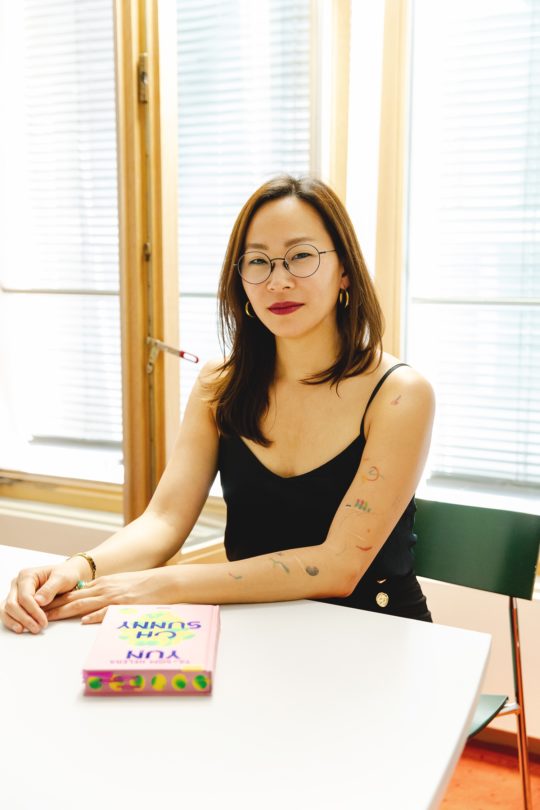
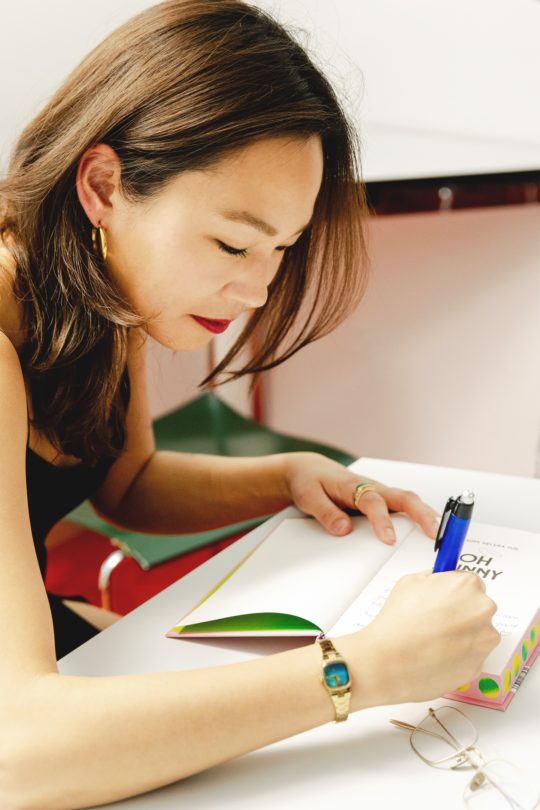
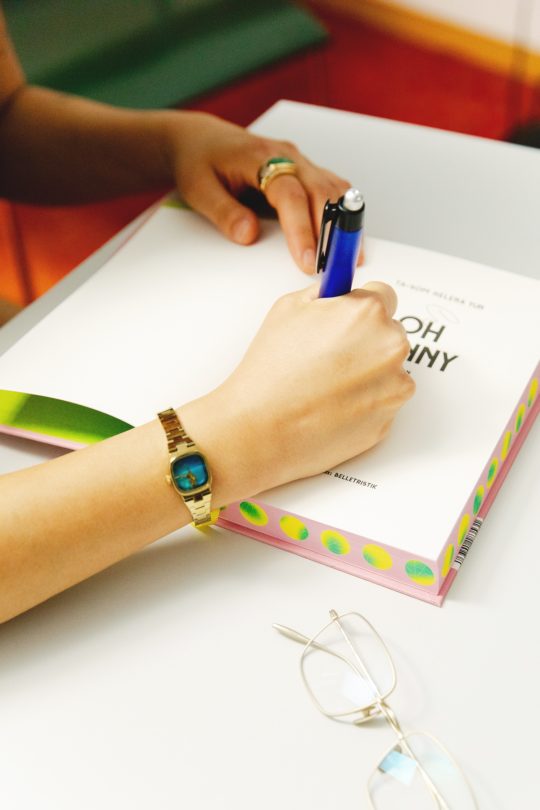
Born in Berlin and raised in Korea from the age of nine, Ta-Som Helena Yun’s life has unfolded across continents and cultures. At seventeen, she returned to Germany and pursued a career in law, eventually becoming a judge. The intensity of that role, marked by reflections on justice, identity, and vulnerability, quietly shaped the novel she was writing alongside it. After three years of balancing the courtroom and the page, her debut Oh Sunny was published by Leykam in March.
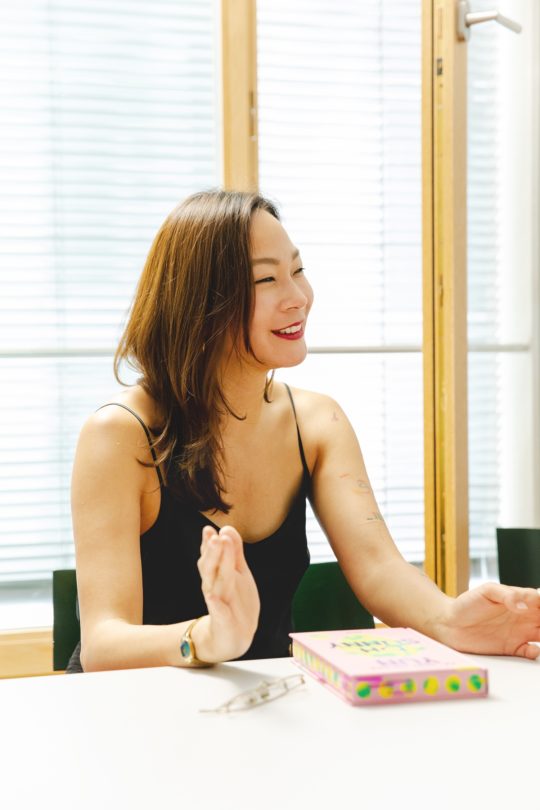
The plot follows Sunny, 26-year-old daughter of Korean immigrants in Germany, who feels disoriented after graduating from law school. When a fight with her parents at the Chuseok festival escalates, she escapes to the gym of the Korean Cultural Association in Berlin, where she is reunited with a family friend, Ha. It’s the start of a dance between who Sunny is, who she wants to be, and the secret she’s not ready to share. I spoke with Ta-Som in mid-April, just before her reading at Dussmann das KulturKaufhaus.
The idea of Sunny, the protagonist in the novel, wasn’t there from the beginning. She grew out of your need to write a book, making the process itself quite unconventional.
Ta-Som: It started during a writing course where we were told we’d write a novel, so I had to take it seriously. When I was younger, I wanted to study law, partly out of a naive idea that I’d be saving the world. I was deeply affected by the issue of sex work, which is illegal in Korea and legalized in Germany. As a teenager, I read a lot about it, especially the conflict between dignity and legality. I buried the topic for a while. Then in the workshop, I thought I’d write about sex work, but it was hard to research, and it felt intrusive to interview people on that. That’s when I shifted to something more personal.
Abortion runs quietly through the book. It is never spoken of too openly, yet always lingering beneath the surface. I thought that was a clever way of weaving it in. In the writing course, however, people weren’t entirely convinced by the idea at first, since abortion is generally not punishable in Germany. Why was it important for you to keep it in?
Ta-Som: Every second friend of mine has had an abortion. Our mothers likely did too, but no one talks about it. There’s deep shame associated with it, so I wanted to write about a character who has had an abortion at sixteen and is struggling with her identity because of it. That’s where Sunny’s story began to take shape.
The novel delves into Sunny’s relationship with her parents and the ways in which she’s dependent on them: emotionally, culturally, even existentially. She’s in her mid-twenties, beginning to ask what it means to be a woman who has lived her life in a certain way. At one of your previous readings, someone referred to it as “delayed emancipation.” As an immigrant myself, I really related to this experience. Do you think we are more prone to this “delay” because we often grow up navigating multiple sets of expectations?
Ta-Som: Yes, absolutely. That’s essentially what I’ve written about in the book. Sunny grows up trying to meet every expectation, first from her parents, then her friends, and broader society. She’s deeply insecure because she’s constantly navigating conflicting values. Her parents’ values don’t always align with the dominant cultural values, and that tension makes it difficult for her to find her own path. Making decisions becomes overwhelming, especially when emotions are involved. It’s simply harder to gain clarity when you’re growing up as a migrant.
There’s a powerful moment in the book: Sunny lies on a mat in the gym, describing its contours and saying something along the lines of, ‘if this mat exists, then maybe so do I.’
Ta-Som: Sunny often questions her own reality and existence, so she looks for physical, tangible things: the mat, the scent of tangerines, the touch of objects, to reassure herself that both the world and she exist. That moment marks the beginning of a series of scenes where she seeks external validation for her inner reality.
Sunny grows up with a very different concept of freedom than her parents. Her father was a freedom fighter in Korea, while she moves through a society where the questions of freedom are more internal: personal boundaries, the weight of her parents’ history, expectations. In light of all that, do you think it’s ever truly possible to feel free?
Ta-Som: True freedom might not be fully achievable, but it’s a goal. Sunny’s father gives her the idea of freedom, political, philosophical, and intellectual freedom, which many families might not even have the language for. But he also places expectations on her to be moral and political in the same way he was, which becomes a golden cage. She ends up searching for a different kind of freedom, one that isn’t inherited but earned through her own journey.
The romantic relationships and friendships in the book are complex, especially with regards to differences in cultural nuance. This is especially hard to navigate for both Sunny and her friend Flavia. I was conflicted about her. Sometimes she’s ignorant, but then she’s also the only one who shows up when Sunny struggles. Was this contradiction intentional?
Ta-Som: Yes, I wanted her to be someone you can’t clearly like or dislike. I wanted to write a more realistic, layered friendship. Real friendships aren’t always based on similarities, they can be challenging, like family. Flavia can be narrow-minded as a white German woman, but she’s also deeply loyal. She doesn’t fully understand Sunny, but Sunny also doesn’t give her the chance. She just rolls her eyes, stays silent and judges. There’s responsibility on both sides, and that tension is what makes their dynamic interesting and real. You love and hate your closest people. Flavia is that kind of friend. She is imperfect, but she’s there.
There’s also Ha, Sunny’s foster sister, who moved to Germany from Korea as a young adult—a detail that draws a clear parallel to your own life. Her role becomes more prominent later on, but even early in the story, she’s someone Sunny looks up to. Sunny’s mother even says that she sees the world through Ha’s eyes. Ha is also considered the strong one, which is a quality that’s often taken for granted.
Ta-Som: Ha, like Sunny, carries a secret, which is her traumatic upbringing, marked by neglect. The key difference is that Sunny, even when closed off, still reaches out to others. Ha doesn’t. She builds a facade, never truly lets anyone in, and isolates herself emotionally. That makes it impossible for others to truly help her. Her character is a study in what happens when you don’t or can’t open up. No one, not even Sunny, really asks her how she feels. She’s perceived as strong, so people stop looking deeper. But everyone needs someone to reach out, and she doesn’t have that.
In your book, you weave historical references—such as the Korean comfort women, who were forced to work in military brothels during World War II, and the 1980 Gwangju Uprising, during which countless student protesters were killed—into a coming-of-age story. How did you strike that balance between sorrow and levity?
Ta-Som: The idea of writing Oh Sunny came to me around the same time I learned about the Statue of Peace in Berlin-Moabit, which commemorates the comfort women. That was a real issue, the debate on whether the statue should remain. I believe every individual is shaped by history. No one exists in isolation; we are born to someone, and their story becomes ours. Especially for women, our history has been poorly documented or erased. Sunny’s struggles aren’t just her own. They are systematic and rooted in this erasure of women’s stories. I also never intended to teach through this book, so there’s no hidden message. If I had one, I’d just post it on Instagram. But I wanted to show how a single life is influenced by moments in history. Sunny learns about the comfort women and starts to connect with the world around her. That sparks something in her, she gets bolder, she regains her drive. That connection between private emotion and collective history felt very organic.
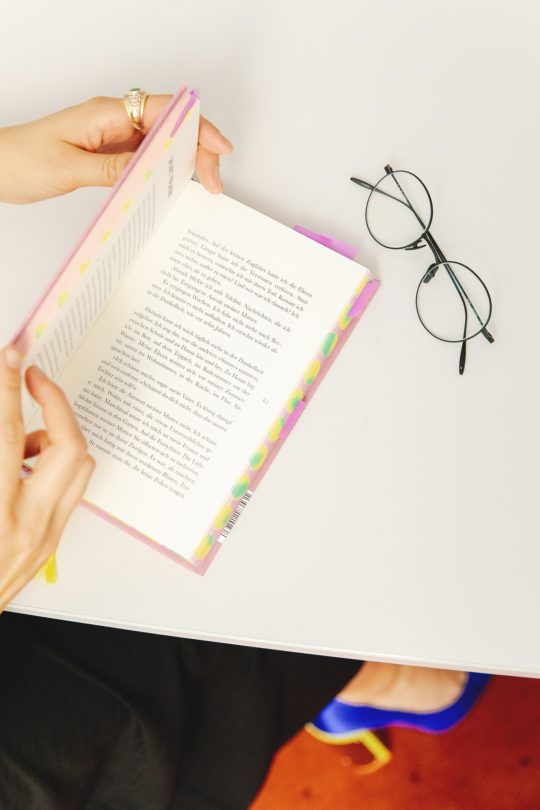
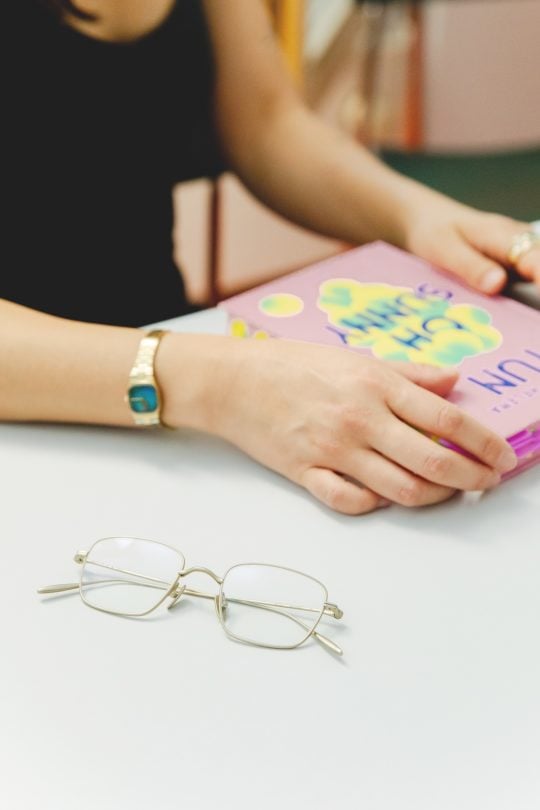
The cover morphs grapes into medicine balls. You said it captures a feeling the whole book expresses. What feeling is that?
Ta-Som: In From Where You Dream, the author [Robert Olen Butler] says that sometimes you write an entire novel just to describe one specific emotion. It resonated with me. The grapes on the cover represent a small but emotionally rich memory of Sunny clinging to them after being scolded by her mother. The medicine balls symbolize something more painful, which she eventually slices up. It’s symbolic of her struggle and eventual transformation. The cover may seem happy at first, just like Sunny, but there’s complexity beneath it.
After living with Sunny for three years, was it hard to let her go?
Ta-Som: I remember when I wrote my last sentence, I was very, very moved. By that point, I had rewritten and re-read the story more than 500 times. I was just so exhausted. I was ready to bury Sunny. And then the book came. I got this parcel with 20 copies. I held it in my hands, but even then, it felt distant. I couldn’t really have that “Oh my God, this is my book” moment. It came gradually. Now, I think I’m okay with Sunny. Maybe it’s time to write something new.