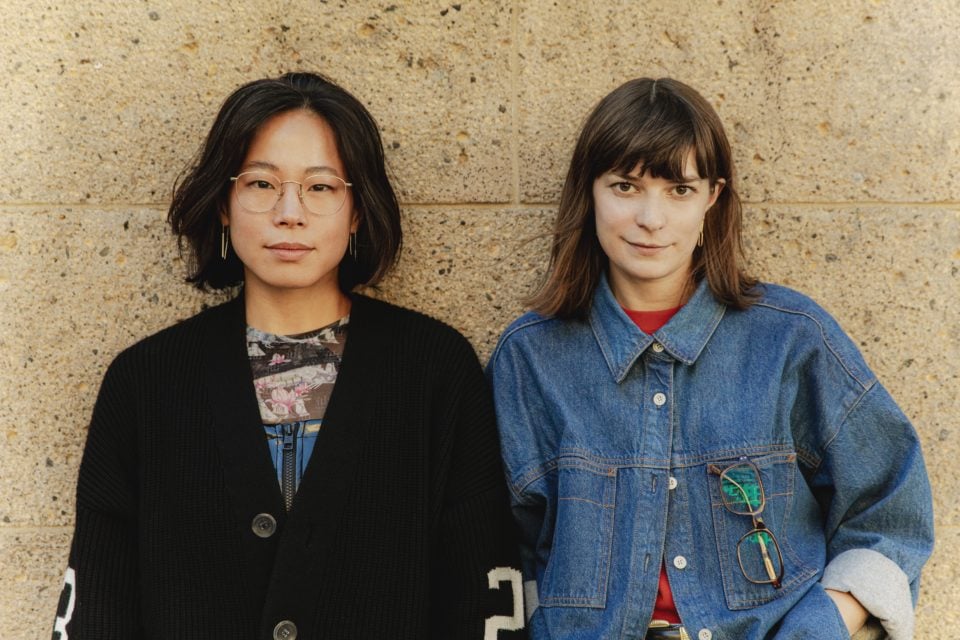

MARIE SCHLEEF AND KOTTI YUN SLOW IT DOWN IN THE VEGETARIAN
When Korean author Han Kang won the Nobel Prize for Literature in 2024, Vienna’s Burgtheater had already secured the rights to stage the first German adaptation of her best-selling novel The Vegetarian, which premiered on 9 May 2025. The move was a clear sign of Berlin-based director Marie Schleef’s uncanny instinct for the stories audiences crave to see—those about female transformation. “I was looking for a text in which a woman turns into something other than a human and came across an article about this novel where she [wants to] become a tree,” Marie tells me. “I just fell in love with it because it tackled on such a beautiful level the idea of reincarnation as another form of existence.”
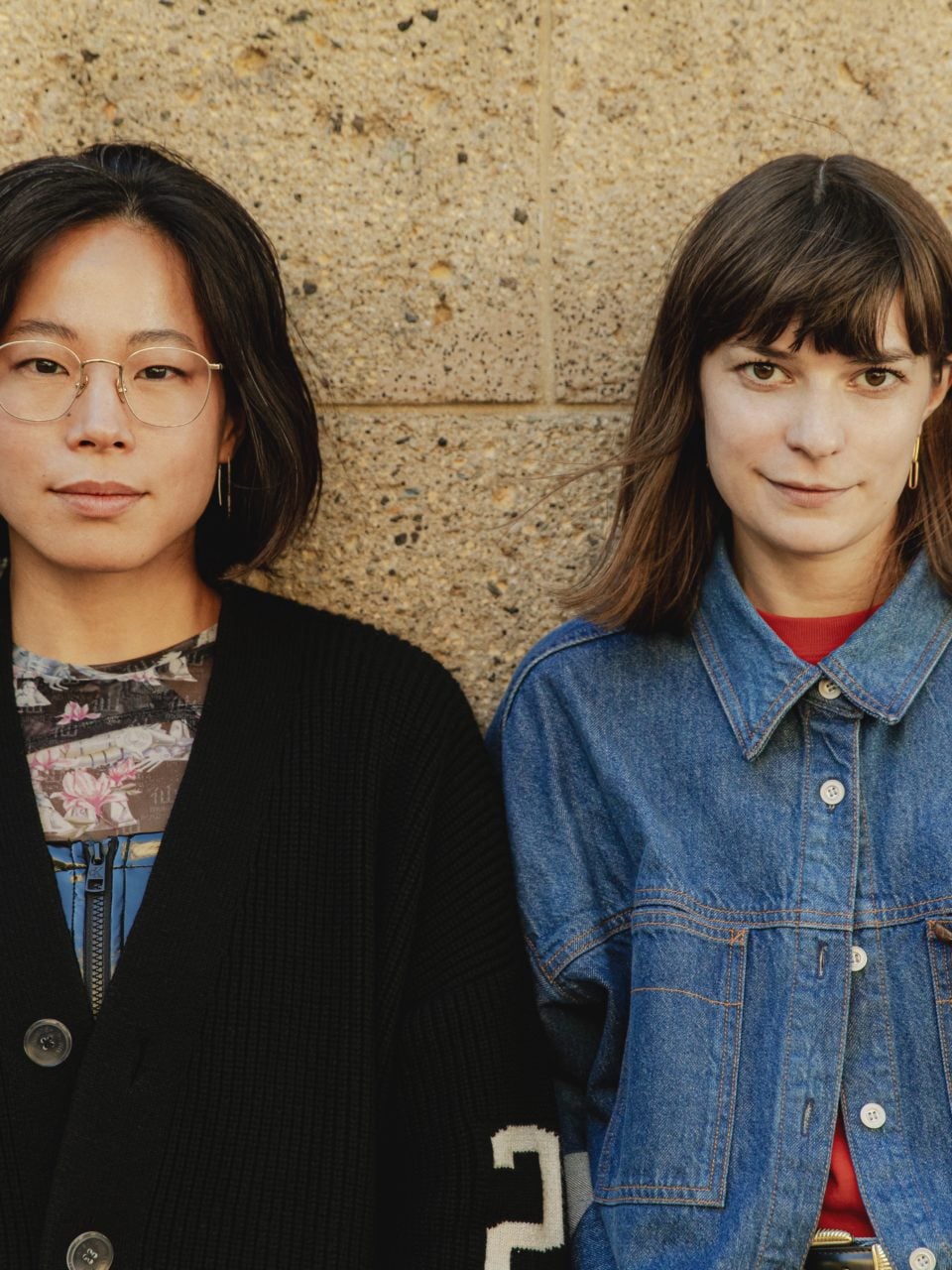
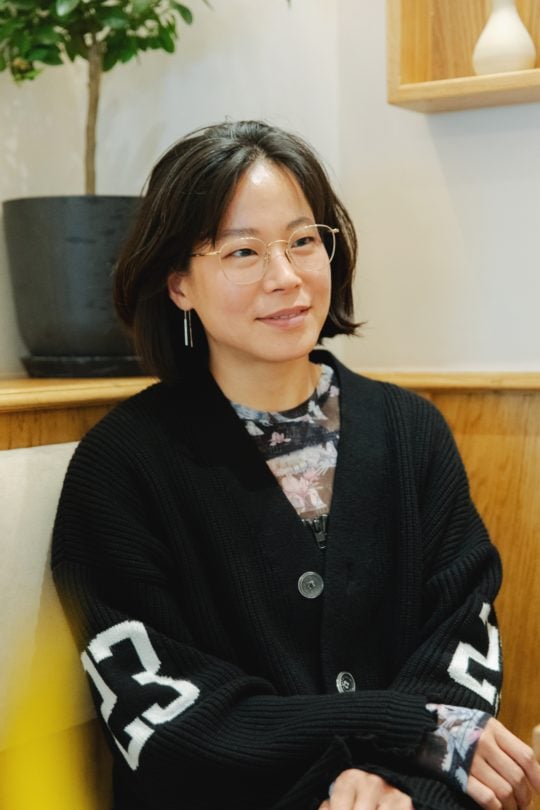
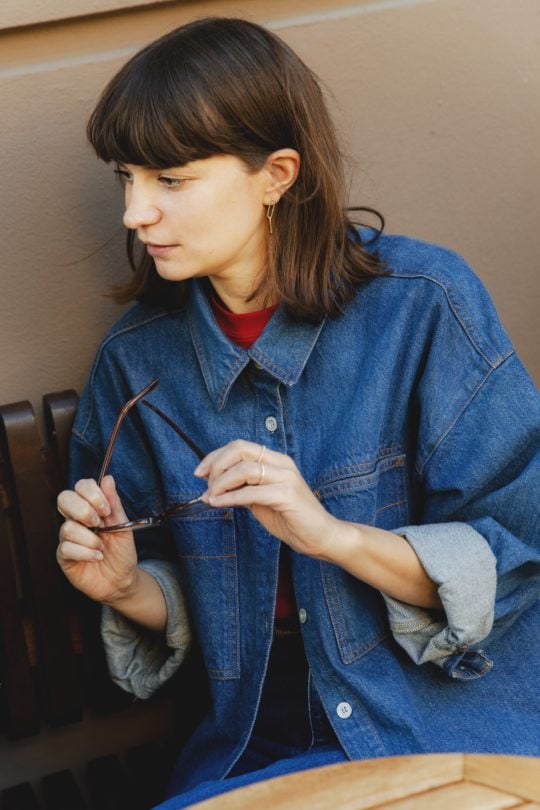
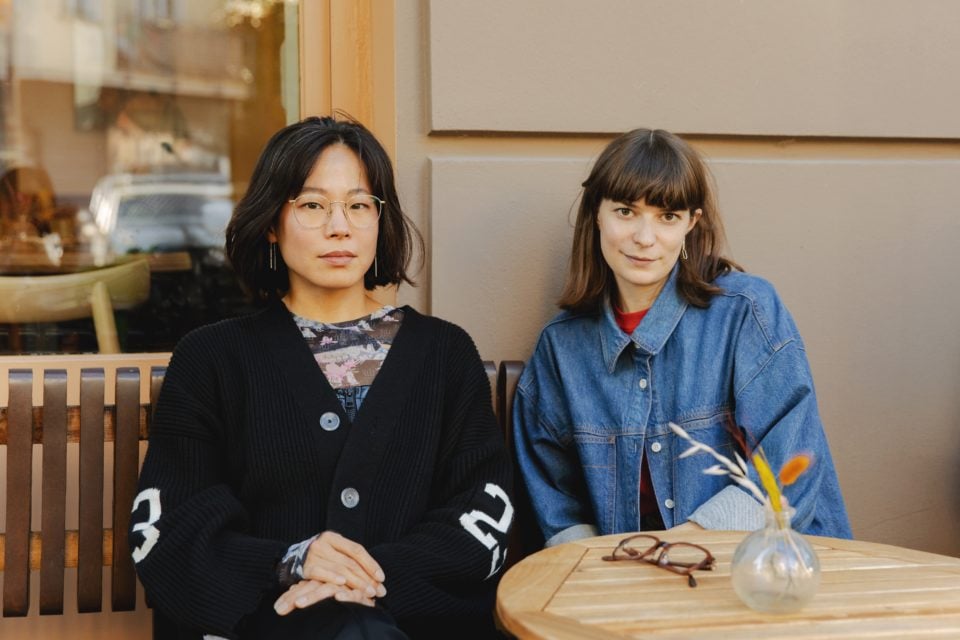
We’re spending a warm September afternoon at Amato, a Japanese-inspired ice cream and pastry café in Berlin’s Prenzlauer Berg, where natural stone and pale wood create a quiet, cocoon-like warmth. Across from Marie sits Kotti Yun, Berlin-based film and theater actress, as well as the play’s lead. Between them, a small parade of desserts, including the zingy vegan Yuzu cake and an ube cheesecake, turns our conversation into something light—much to the contrast of the content of the story we are here to discuss.
Han Kang’s 2007 novel The Vegetarian follows Yeong-hye, a seemingly ordinary woman from Seoul whose decision to stop eating meat after a haunting dream spirals into an act of radical defiance against her family and society. Marie, who does two productions a year focused on stories written by women, became fascinated with the novel because it “looked at women in a different way than Western literature does.”
On paper, the novel’s triptych structure seems perfectly suited to the stage, but the production, though truthful in its adaptation, wasn’t an easy fit. This is the second time Marie has tried to acquire the stage rights from Han Kang, who had previously declined. Perhaps Marie’s “love letter”—or the fact that this time, the request came from one of the largest theaters in the German-speaking world—eventually changed her mind. But more importantly, its physical and psychological nudity, as well as its flashes of brutal violence made it a fragile undertaking. Marie felt the pressure to get it right.
Casting her “talented friend” Kotti as the lead (they had previously collaborated on the production of Kim Jiyoung, Born 1982, an adaptation of Cho Nam-Joo’s million-selling novel that premiered in Cologne in 2023) helped her unlock the direction in which she wanted the play to go. “It had a lot to do with her acting style that’s quite reserved,” Marie explains. “I felt like she’s the perfect person to play the main character.”
For Kotti, who studied acting in both Seoul and Berlin, the role demanded meticulous preparation. Physically, dance and yoga helped her sustain the several-minute headstand that anchors the third act. For character development, she read the novel eight times, in both Korean and German, searching for a way into the soul of a protagonist who exists largely through the perception of others. She managed to find the essence of both Yeong-hye and her older sister, In-hye, partly through research, partly through her own memories of growing up in Korea. “I know this feeling of not owning your life,” Kotti remembers, tapping into poetic descriptions that mirror Han’s prose. “It was like looking at both sides of the moon. In-hye is trying to fit in and always doing her best. But she also has a dark side that Yeong-hye is living out. So there’s this dualism.”
The tension is palpable, as Kotti possesses a quiet gravity on stage. Even when she isn’t in the spotlight, she commands full attention, so much so that it feels almost wrong to look away. “She dares to ‘do’ little on stage which is really hard,” Marie praises her.
“You have to have the strength to think that what you’re doing is enough, and Kotti is somebody who can fill an entire room by just standing there.”
The two-hour production unfolds from a script barely fifteen pages long (most average between sixty and ninety), its dialogue sparse but concise and deliberate. The entire play is performed in slow motion (the speech, mercifully, is not). It’s a technique Marie enjoys and has used in other productions like ER PUTZT (HE CLEANS) or Are You Ready to Die?: “When you slow it all down, you really get to watch everything very carefully.”
The pacing seemed to mirror Yeong-hye’s inner state, with her mind slowly slipping into dissociation. “Or how the others perceive her and try to involve themselves in her life,” Marie counters. “Once you enter the orbit of someone who is dealing with depression, it does something to you and your perception of time. You can’t really reach that person.”
I wonder what it must have felt like to prepare for such a serious performance without slipping into goofiness that slow motion can unintentionally provoke. Marie, ever resistant to uniformity, urged her actors to find their own rhythm—but perhaps the key was hidden in the book’s very cadence. “While researching Han, I had the sense that she was somehow living the slowness of The Vegetarian, because she’s such a thoughtful person,” Kotti explains. “It feels as if she’s always slowly searching for the right words. You can see it in how she writes, how she researches, how she shapes her stories. That discovery was fascinating to me, and it helped me find Yeong-hye.”
Marie recalls watching early interviews with Han in English, where the author, fittingly, reflected on how when you slow things down, the entire world seems to move in slow motion. That moment sealed her vision. “I remember thinking, wow, this really is the perfect fit.”
Similarly, the technique seems to work as a meditation against speed and convenience, our cultural demand for immediacy, so to speak. It slows down time, forcing the audience to confront their own discomfort of sitting in stillness, which, as I witnessed, some are better at managing than others. “The intention is never to offend or to shock anyone,” Marie points out.
“But entertainment also doesn’t necessarily mean that something needs to be easily digestible. The beauty of theater is you sit in a room with many people which is quite rare to do nowadays. It’s a luxury in the times we live in.”
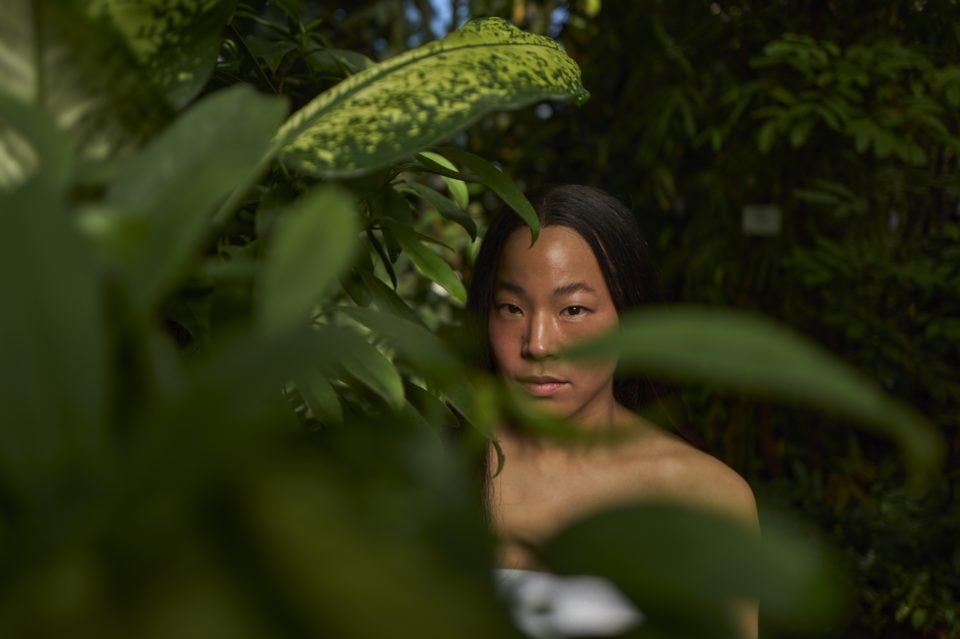
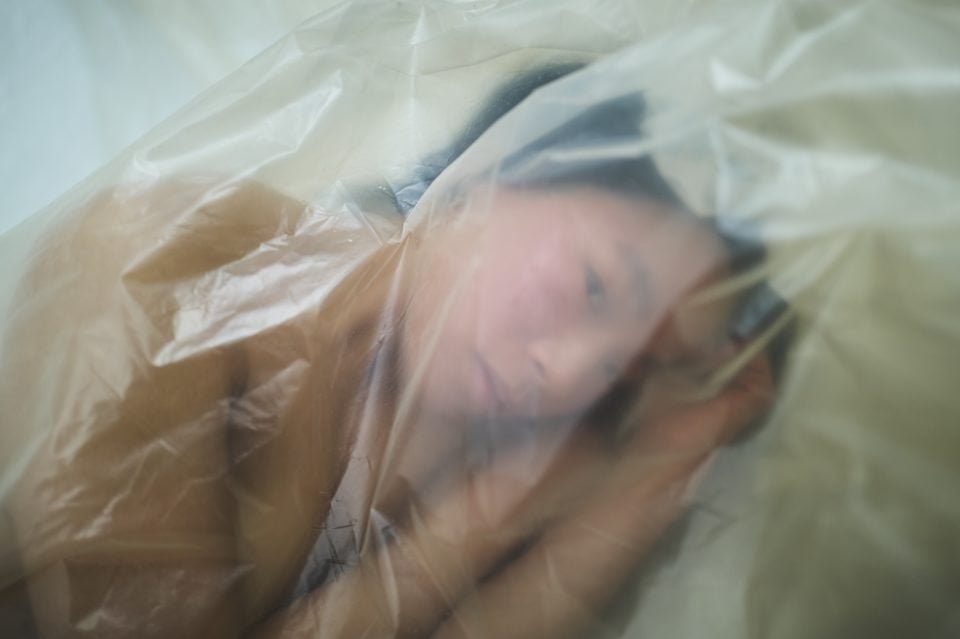
The stage design of The Vegetarian unfolds like a slow metamorphosis—from the stark, clinical white of the opening to a TV room flickering with abstract, artful videos, and finally to the lush abundance of a verdant garden teeming with plants. It’s a striking counterpoint to Yeong-hye’s increasingly withdrawn inner world: the further she drifts from reality, the richer and more enveloping the scenery becomes. The play is framed by video installations that capture her dream sequences—the only moments when we hear the protagonist’s inner voice, rendered with the same haunting precision as in the novel. For this, Marie collaborated with video artist Lillian Canright, who spent a year traveling the world, including Japan and the U.S., capturing footage of trees, plants, and slaughterhouses. Set and costume design were entrusted to Lina Oanh Nguyễn and Ji Hyung Nam, respectively. Marie emphasizes their creative autonomy: “It’s important to give your team as much trust as possible. It’s really about the Gesamtkunstwerk, we all do it together. That’s why I love theater. It’s not just a singular art form. I need all these other people to make it happen, and when we work, I’m like wow, I’m so not alone in this.”
Both Marie and Kotti have a very dynamic and busy career, and though they are based in Berlin, the work keeps sending them abroad. In contrast to many others, who come here to satiate their creative urges, for these two the city is the place they unwind. “Somehow it’s become standard that I don’t work in Berlin,” Kotti jokes. “When I’m here, I’m in my own cozy world, where I spend time with my kid and do my physical training.” But there is also a more sobering reason, she says, which has to do with “the abatement of cultural budgets,” which makes it difficult to find projects in Berlin.
“It’s also hard, I think, to work in the city where you live,” Marie adds. “Our job isn’t nine-to-five. I don’t go home and just switch off. The two worlds start to blur.”
Marie, who started her professional journey at Bard College in NYC, has just returned from a three-month stay in Kyoto, where she lived with a robot as part of an experiment on loneliness (but that’s a story for another time). Back in Europe, she’s already in motion again, fresh from Switzerland, where her play Are You Ready to Die?—a haunting meditation on the final year of Joan of Arc’s imprisonment—premiered at Schauspielhaus Zürich on September 19. Next up: The Lottery, inspired by Shirley Jackson’s short story, opening on February 28, 2026 at the theater in Essen.
For Kotti, who is used to TV projects materializing just three or four weeks in advance, The Vegetarian offers partial stability. With the Burgtheater announcing further additional dates through the end of the year, Kotti will be commuting to Vienna for as long as the play remains in rotation. “It can go on for a year, for two, for ten. We don’t know,” Marie says with a shrug. Kotti agrees: “You never know what comes next.”
Thankfully, both women are more than equipped for the unknown. In fact, I’d even dare to assume they prefer it that way.
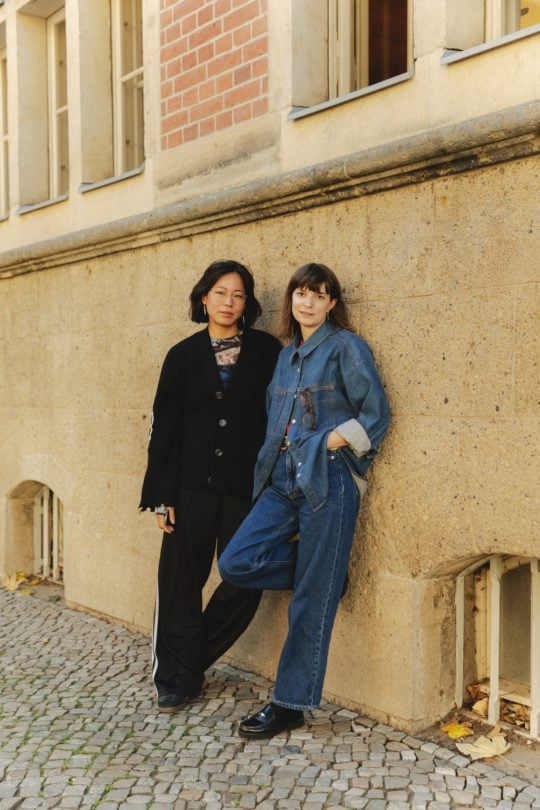
Kotti wears Niklas in Gold and Marie wears Gale in Havana Tortoise.