CRISTINA RIVERA GARZA: A SISTER’S SEARCH FOR JUSTICE
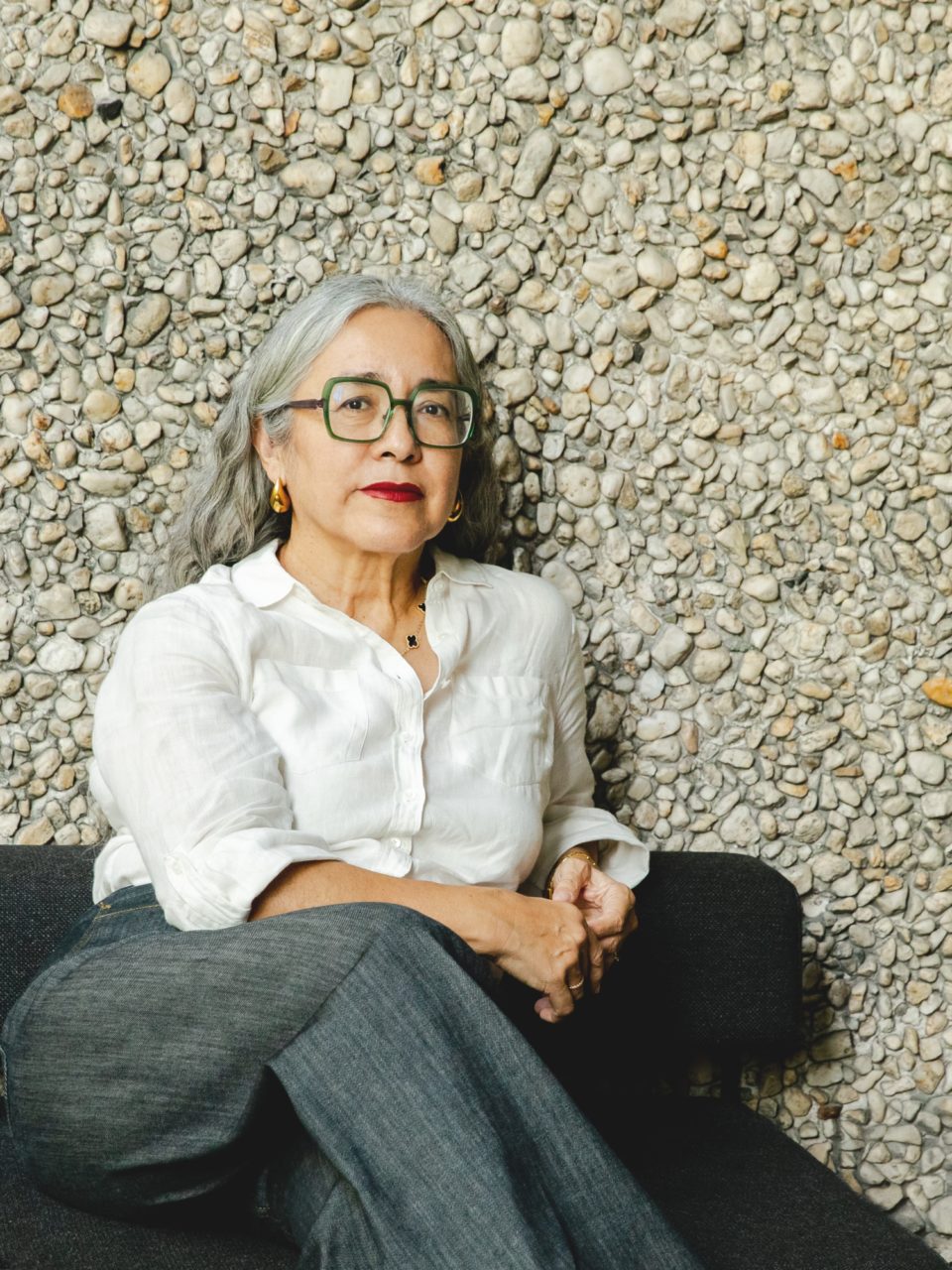
The Mexican-American author Cristina Rivera Garza reflects on curating part of the program of the international literature festival berlin and on her Pulitzer Prize-winning book Liliana’s Invincible Summer, in which she confronts the loss of her sister and reshapes the way we talk about femicide.
Cristina, welcome to Berlin! You have quite a connection to the city. How did that bond begin?
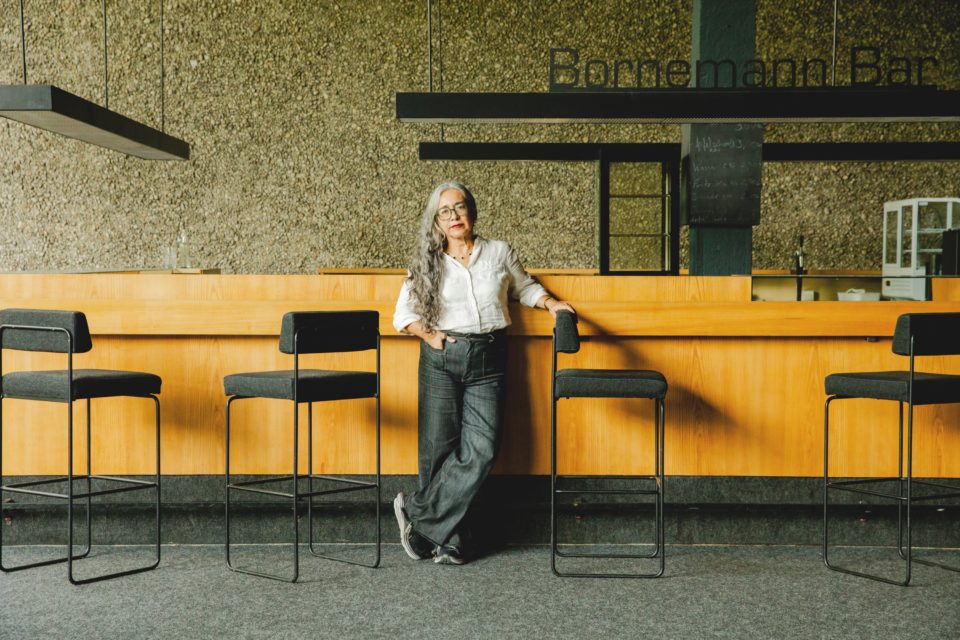
My father was fascinated by and in contact with several universities in Germany. He was a researcher in agricultural sciences, working with potatoes, a very important staple in Germany. I also studied German at UNAM in Mexico City, though I’m not sure where in my brain it went, since I can’t seem to recall any of it now. More recently, I was awarded a residency at the American Academy in Berlin, where I spent half a year by the lake on the city’s outskirts. Afterwards, I received a DAAD fellowship and lived in Berlin for another year. Berlin has all these layers of history. Wherever you go, there is no escaping that. In that sense, it’s a city that interests me profoundly because of the physical connection with memory, which features permanently in my work. So it seems that I’m constantly coming back to Berlin, which I like.
Becoming the second Curator in Residence of the international literature festival berlin is a good way of acknowledging that connection.
Berlin has given me a lot. While I was here, I was fortunate to become part of a very dynamic, fabulous community of immigrants from Latin America. When I received the invitation to curate events for the festival, I thought it could be a good way of repaying all that kindness and opportunity.
Every year in September, the festival (11.-20.9.25) brings together over 100 international authors for book premieres, readings, and panel discussions. Your part of the program has a strong focus on writers from the Spanish-speaking world. What drove that direction, and how did you set your priorities in selecting them?
I believe that writing is a powerful community making practice. I don’t believe in the writing process that is isolated from society. So I was very interested in inviting writers who are activists, committed to their communities, and conscious of the shared, borrowed language we breathe and live in. There are authors already translated into German, who might be known here, but also those celebrated in their own countries and communities who deserve a larger audience. Since I’ve lived in the United States for a long time and it is the world’s second-largest Spanish-speaking country, I also wanted to include a writer from that community. Fortunately, Javier Zamora, Salvadorian poet and activist, was excited to come to Germany specifically for this festival. We also have writers from Colombia and Peru, as well as writers who live outside their countries of birth yet actively create initiatives to build community wherever they are.
Were there any other criteria?
Of course, all of them are outstanding writers. Their books are powerful and transformative. You begin reading as one person, and by the end, you may have become someone else. To me, that’s the greatest test of the liveliness of what we do.
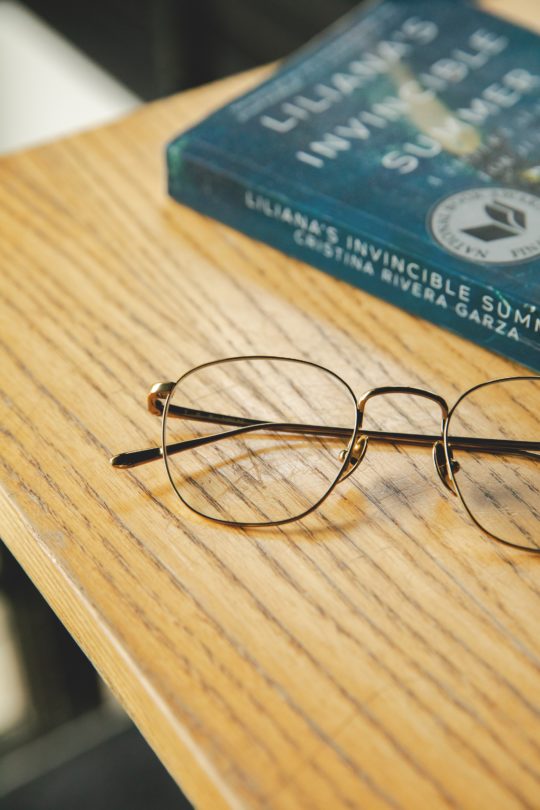
On 13 September, you’re opening your curated selection with a presentation of your Pulitzer Prize-winning book, Liliana’s Invincible Summer, which paints a portrait of your sister, who was murdered by her ex-partner in 1990. You start the book with a deeply frustrating depiction of bureaucratic inadequacy, your attempt to find Liliana’s police case file, which ended unsuccessfully.
Something very close to Liliana’s femicide is the issue of justice itself and how complicated, cumbersome, and frustrating it is just to go through the supposedly simple steps of filing a report or providing information. You get sent to so many different offices, receive different responses, and the process always seems delayed or postponed. I wanted readers to experience that frustration. One of the many things literature can do is help us leap out of ourselves and inhabit someone else’s body, to see the world through someone else’s eyes. That’s why the book begins exactly at the point you describe, where the city also becomes a major character. It’s not just a setting; it’s an organic element of the storytelling.
While writing the book, you moved between English and Spanish, using English to create emotional distance that made coping a bit easier. Can you talk to me about that process?
I think we need to have a larger conversation about the relationship of bilingualism, translation, and grief. It is said that you’re emotionally closer to your native tongue, but I think we need to consider the opposite, the fact that when you are writing about issues that are very close to you, sometimes the so-called second language offers you a place of refuge. I didn’t know it when I began, but it allowed me to finally write the book I’d wanted to write for 30 years.
A big part of the book is written through Liliana’s private letters and diary entries. Did you have any hesitation about using them? How did you decide what to publish and what to keep undisclosed?
It’s a very good question because it has a lot to do with issues of appropriation or extractivism, which I was worried about. But let me tell you something: when I first opened Liliana’s boxes and saw some of the papers she had folded carefully into origami shapes, and they began to unfold, almost leaping out at me, I thought, this is a sign. Liliana wasn’t only expressing herself, she is a writer. And a writer needs to be read, not just by one person, but by as many people as possible. Because Liliana had been so violently, forcibly silenced, I felt this was her chance, and my chance, for her voice to be heard. As long as I could respect and honor that voice, I felt I would be on safe ground.
The book also features her friends’ testimonies, showing her as both strong and independent, yet also vulnerable and sensitive. It gives a very realistic, tangible portrait of a young woman. How did these conversations go?
It was really important to me to get to know these other Lilianas that were real for her community. So I set out to contact her friends from back then, which was not easy. It was during the pandemic, so these were phone interviews. I was not recording the conversations, because I didn’t want there to be another medium between us. There was only one question on my side: regálame un recuerdo de Liliana (please give me a memory of my sister). I didn’t know what I was going to get. It wasn’t about using their exact words in the book; I was more interested in keeping the tone of the conversation. (They had veto power over whatever I was writing). I wanted people to feel Liliana alive and close by, just as I felt when I first read her letters and went through what I am now calling her “effective archive.”
Writing this book meant being faithful to her, to yourself, and to her friends’ testimonies, while also creating a work that challenges how we speak about gender violence. How did you cope with your own grief while carrying such an ambitious task?
The telling of femicide in our societies has long been dominated by patriarchal narratives. Part of my task was to dismantle that notion. To do so, I needed to approach it as a writing process. That requires a certain distance. It’s not only about placing myself in the story but about creating an experience that might become pivotal in questioning how our society is led, particularly in terms of gender imbalances. One thing I held very clearly in my mind is that Liliana was the protagonist, not my grief. Of course, I had to carve out a space for myself in the telling, but I wanted that space to remain very discreet.
At the time of Liliana’s murder, femicide was often framed as a consequence of passionate love, making it seem private and silencing women. Traces of that framing still persist today, leaving many women feeling they can’t speak openly. How can we change that?
We need to activate conversations about gender hierarchies, imbalances, and violence, but we need to talk about this in ways that move away from institutional, patriarchal narratives that have taught us women are guilty or responsible for their murders, while perpetrators go free. Throughout the years there have been spaces for the telling of these stories, but not from the perspective of women or victims or communities or families. So what we’ve learned with the Hollywood story of the dead girl narrative is that she’s guilty. She was in the wrong place. She was wearing the wrong clothes, she was smoking or drinking or doing drugs. And of course she deserved it. That’s the story.
“Why didn’t she leave the abusive relationship?”
Exactly. That’s another reason why working closely with language is so political. Because we are not only handling words or concepts; we are creating and forging narratives that allow us to tell our stories differently. My conviction about the power of literature resides precisely in that. When we say we are able to stand in someone else’s shoes, it means we enter someone else’s perception system. And once that happens, I believe anything can happen.
In Liliana’s case, there’s an arrest warrant against her murderer, Ángel González Ramos, yet he was never captured. There are also rumors that he drowned in 2020. Your book won the Pulitzer in 2024, but even since then the Mexican justice system has done little. If such a high-profile case remains unresolved, what does that say about our societies, not only in Mexico, where 10 women are killed in femicides every day, but globally, where femicide is also a pressing issue?
It seems to me that we continue to be societies that have developed a great tolerance for women’s suffering and that we live in nations with little regard for women’s safety. This is evident in the impunity surrounding these crimes, in how many cases are forgotten or neglected, or become so full of obstacles that families are left frustrated, unsure of what to do next. Impunity teaches men, in general, that they can get away with murder, that they can kill women and face a huge chance that nothing will happen to them. That is a profoundly wrong message.
How can we find ways to cope with injustice when murderers don’t get punished for their crimes?
Over the years I’ve thought deeply about the kind of justice that emerges when people acknowledge Liliana’s existence. I am speaking of restorative justice, specifically, and what we can achieve through collective memory. That is a larger justice, almost a cosmic justice, that can be delivered. For me, it has become increasingly important to speak about truth: Liliana’s truth, and the truth of the women we lose to gender violence. We need to look at the world through their eyes, to see how complicated, menacing, but also full of possibility it is.
I am certain the book has had a profound effect on readers, especially young women.
Every time I give a talk, there are always groups of girls who share their experiences with me, telling me how important it was to read Liliana’s struggles and reflections, and how it helped them open their eyes and even change their lives. That is when I think more deeply about restorative justice. Writing, after all, has the power to invoke it.
Cristina’s latest novel: Death Takes Me.