
REFINED SIMPLICITY: A CONVERSATION WITH GONZALEZ HAASE AAS
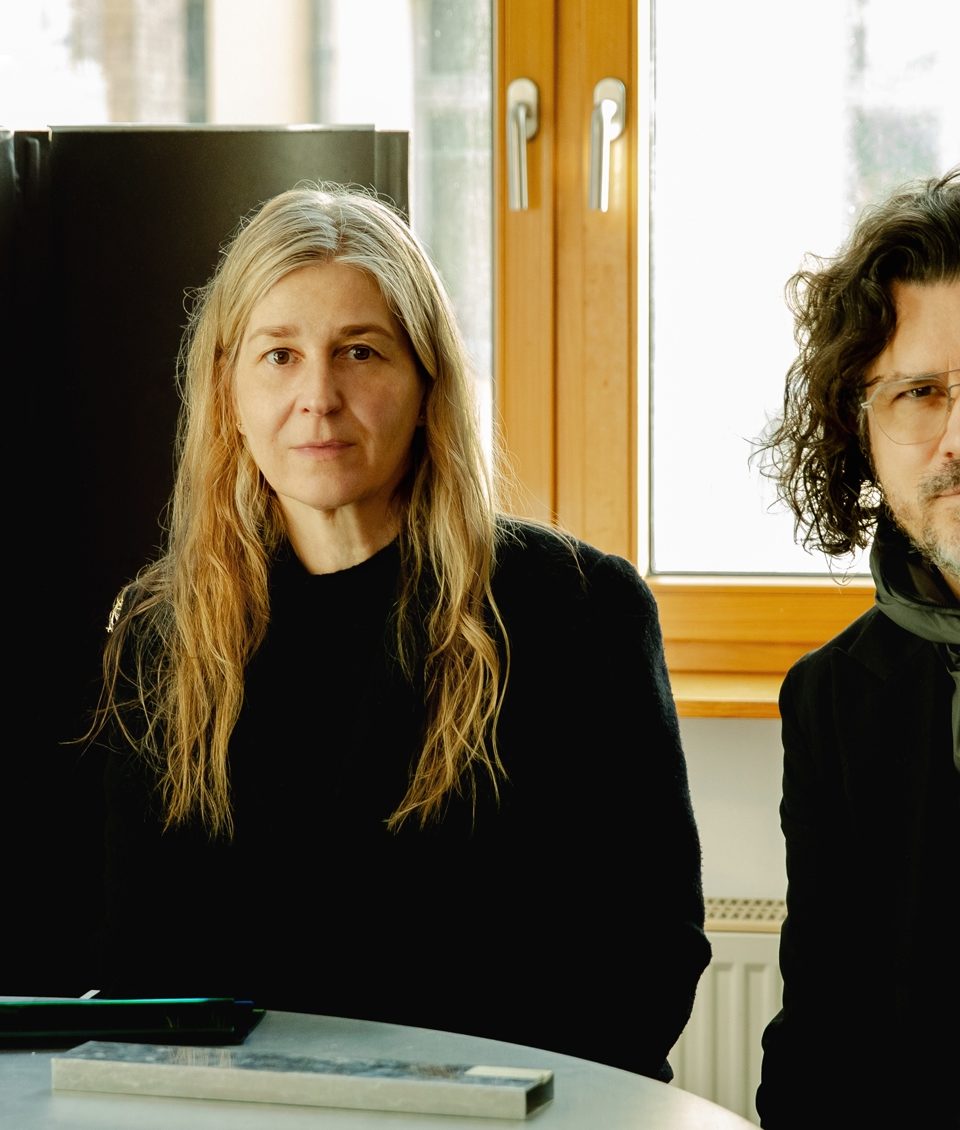
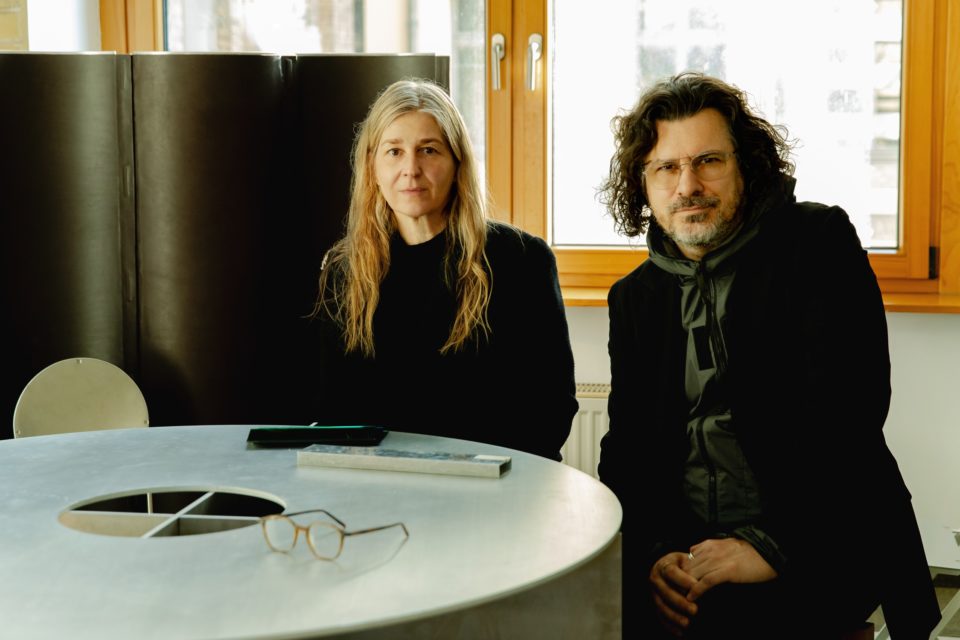
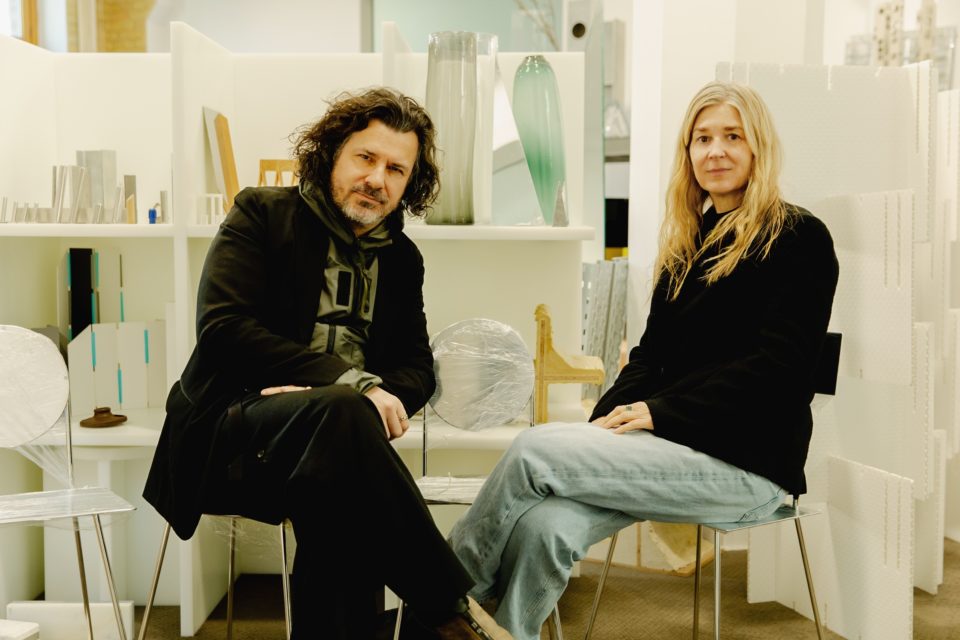
Next week, YUN will open its second Berlin location at Kurfürstendamm 11. Back in February, amid material samples, 3D renderings, and email chains stretching as long as the boulevard itself… an interlude. We sat down with Judith Haase and Pierre Jorge Gonzalez of the renowned studio Gonzalez Haase AAS (Atelier Architecture and Scenography) to discuss their vision for the new store. Haase and Gonzalez began their practice in the late 1990s, designing art galleries in Berlin—a minimalistic approach to displaying works of art that they first encountered in New York. This ethos of refined simplicity continues to shape the many spaces they’ve since become known for.
KATHARINE WIMETT: I’ve read a bit about the beginning of your initial collaborations. Could you talk about that time in your lives?
JUDITH HAASE: It was 1996. We met in New York at the cultural center. I had already been working with Robert Wilson [American theater director and visual artist] for eight years, and Pierre Jorge had received a stipend from his art school to come to the center.
WIMETT: By cultural center, you mean The Watermill Center?
HAASE: Yes. Robert Wilson bought the site, which used to be an old Western Union factory, the original portion was from 1926, and other sections were from the 1940s. He wanted to renovate it and, like Andy Warhol, create a kind of think tank where people could come together to work on artistic projects. Musicians like Laurie Anderson and Lou Reed, composer Philip Glass, actress Isabelle Huppert, and artist Yoko Ono were all there.
WIMETT: While you were there? You saw these artists coming and going?
HAASE: Yes, yes, we did. We even worked on a project with Lou Reed and Laurie Anderson.
PIERRE JORGE GONZALEZ:
They took our room, actually, and we’re pretty sure they stole our film—empty film for their camera. Maybe it was someone else, but we like this version of the story better.
WIMETT: It’s a better story. Collaborating on The Watermill Center, my understanding is that you helped finish the renovation. How did that project shape your long-term collaboration?
HAASE: It was an existing building, an existing structure. And this was the first time we worked on creating a gallery space, Wilson has a large collection of chairs and ceramics. We were designing a space to exhibit his art collection, it was an introduction to this kind of work. In our first years back in Berlin, we focused entirely on creating gallery spaces.
WIMETT: How did you both find yourselves embedded in both the New York and Berlin art scenes? Was art school the foundation of your network?
HAASE: We both studied at art school. Pierre Jorge studied scenography, and I studied architecture. I moved from Bremen to Berlin to study at the only art school in Germany offering architecture at the time and because I wanted to do interdisciplinary work.
GONZALEZ: I was very interested in museography, how we present works of art. That’s why I went to New York to work for Robert Wilson, because his foundation functions as a kind of museum. It was a time when many artists were drawn to Berlin, and many of our friends had connections in both places.
HAASE: The first work I did once back in Berlin was for Galerie Thomas Schulte, who represents Robert Wilson.
WIMETT: A small world.
HAASE: Yes, and the people at Watermill worked across all kinds of disciplines—dance, acting, design.
WIMETT: When you set up shop in Berlin, was there something you hoped to bring back from your time in New York, a sensibility?
GONZALEZ: When we were in New York, Chelsea was booming. Just a couple of years before, it wasn’t developed at all. We were lucky, Robert Wilson introduced us to Gluckman Mayner Architects, who designed many of the Chelsea galleries. We took that method of developing spaces for art and brought it to Berlin.
HAASE: Actually, we first went back to Paris, working in a tiny 20-square-meter space. Then we found this beautiful 200-square-meter space in Berlin for the same price. How do you start your own practice? You need your own space.
WIMETT: Young creatives still talk about Berlin this way, as a place that offers more space than other European cities.
HAASE: And it was an exciting time. We were part of a changing city.
WIMETT: Let’s talk now about the new YUN store in Berlin. What kind of design did you feel the existing space on Ku’damm was asking for?
HAASE: We found the location exciting because we’re big fans of the Egon Eiermann church directly across from the store. Lighting is so important there, during the day, it’s a concrete volume, but at night, the glass blocks glow blue and red. Our projects are always about light, and you see that here. At the entrance of YUN, the showcase window is lit with an orange-yellow light, like the sun. On the other side, the cooler neutral light highlights the products.
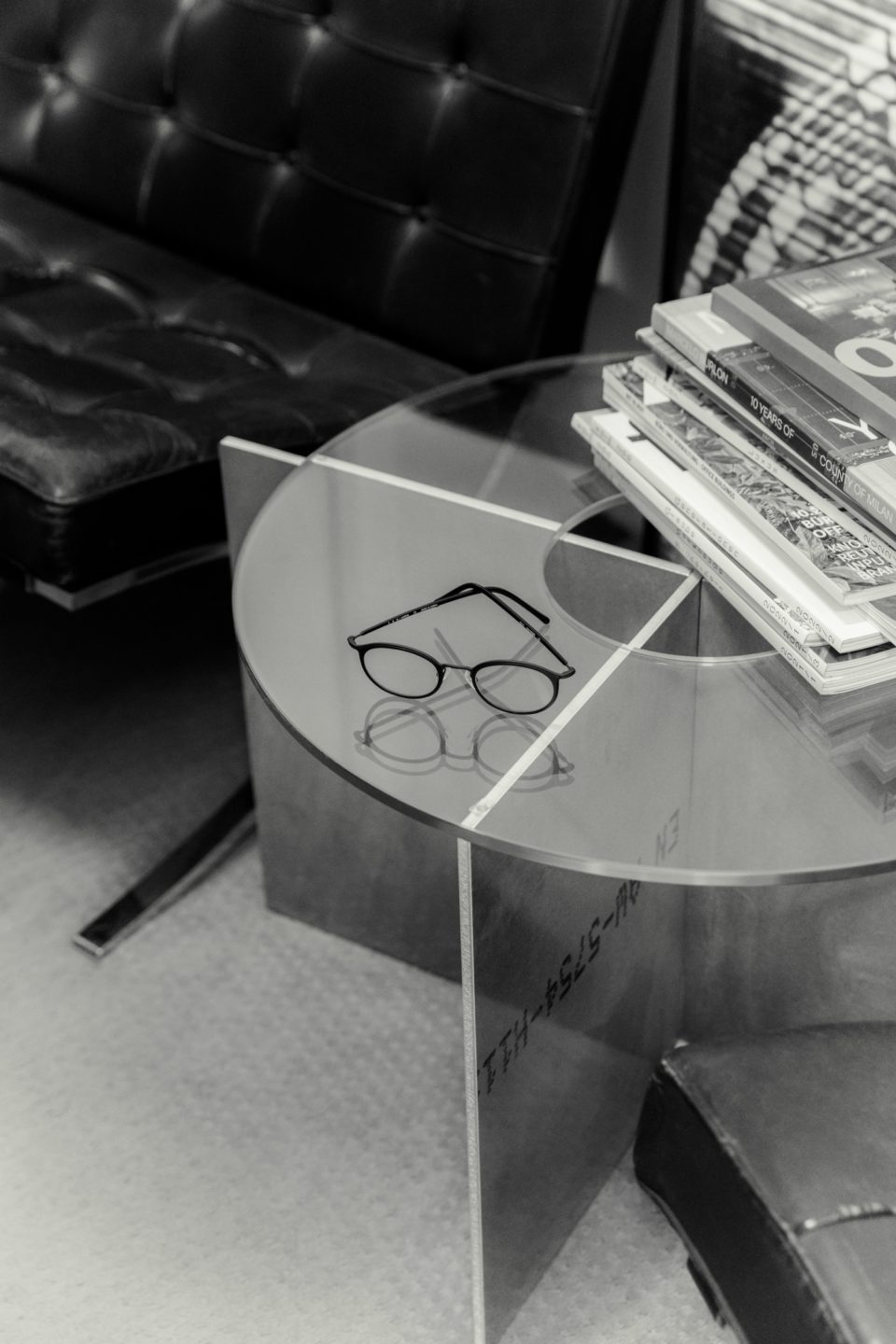
GONZALEZ: We built no walls, it’s all about filtering space, playing with optical perception through light and distortion. In construction, furniture naturally forms straight lines because they’re fragments of larger materials. But vision often perceives curves, so the display tables we designed are subtly curved, inviting movement.
HAASE: We see these elements as architecture, not just furniture. The display tables influence how people will circulate through the space.
GONZALEZ: We find it interesting to work on a space and not touch much of the existing structure. Our approach is simple: we use lighting, furniture, and curtains to transform the space. In retail, every five years it seems people demolish everything and build something new. We justify our approach to retail as a form of sustainability. In doing so, you redefine luxury. It’s about a large open space, where everything is visible and evenly lit. This is our aesthetic.
HAASE: This also acknowledges the temporality of things, the world is changing, you are changing. We are flexible: it’s not about a heavy design that cannot be moved or rearranged. The space therefore shows the capacity for change.
WIMETT: In the new YUN store, aluminum and curtains are essential to the design. And I know these are materials consistently used in your spaces.
GONZALEZ: We work in layers. The light blue paint is a subtle statement, something a little unexpected yet neutral as it references the sky. Everything for the product is made of metal, framing the eyewear by reflecting light. And then everything in the space made of wood is related to service, to an exchange with the customer. Finally, the curtains act as filters, creating a soft separation. Like the stanchions with wire in a museum, fabricating a distinction of where visitors or customers can and cannot go.
HAASE: The curtains are like a cloud filtering the sky.
WIMETT: That ties into your background in scenography, Pierre Jorge.
GONZALEZ: Our best projects reflect where we come from. You can feel our culture in them.
WIMETT: With so many interiors in Berlin designed by you both, how do these spaces also reflect the city?
GONZALEZ: Berlin’s simplicity is its strength. When working with certain luxury brands, budgets are high, but creative freedom can be limited, they want spaces that reflect their identity, not the designer’s vision. Here, we had carte blanche, which gave the project real power and a clear statement. Luxury design often absorbs the designer’s work into the brand, making it harder to maintain an aesthetic signature. In Berlin, often the approach feels more modern: designers are seen as authors, shaping spaces rather than just serving a brand’s image.
WIMETT: I wonder, what are some of your favorite spaces in the world? How would you describe those rooms?
GONZALEZ: It may be a bit masculine, but I think of very old bars in Paris, where everything is wood except perhaps the white ceiling. These spaces create a dense, intimate atmosphere—you can have a cocktail, maybe smoke a cigar. The room changes your mood, creating a sense of potential, of what might unfold there.
WIMETT: I suppose it’s a kind of performance, an interplay between the staff and the customers.
GONZALEZ: Yes, I’m very fascinated by theater and cinema. For me, it’s always about interaction, how a space is activated by the people within it.
HAASE: For me, I think of the room in Neue Wache by Heinrich Tessenow. You walk in, and there’s a hole in the ceiling. The sun comes in, the rain comes in. It feels like a church, but without a connection to any specific religion. Instead, it connects to the planet itself, serving as a reminder of human scale.
WIMETT: Tell me what’s next for Gonzalez Haase?
HAASE: We’re working on many different projects at once, and they energize each other. This keeps us constantly thinking, it’s a very fluid way of being creative.
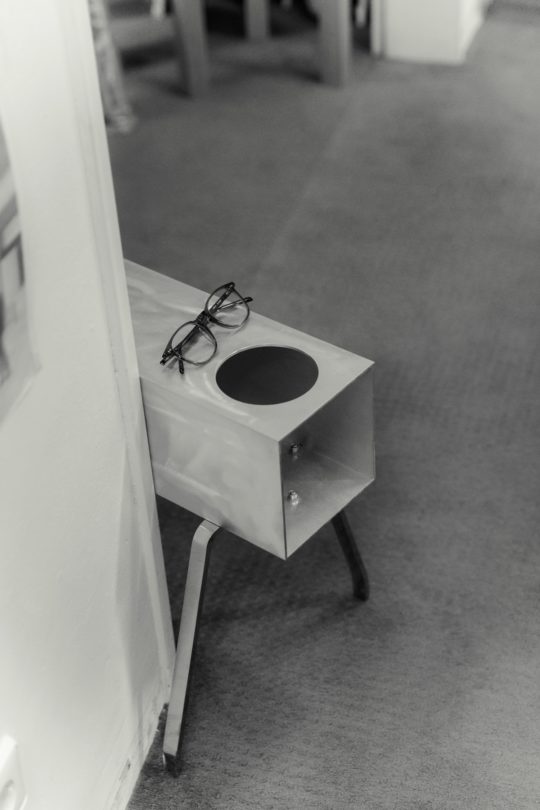
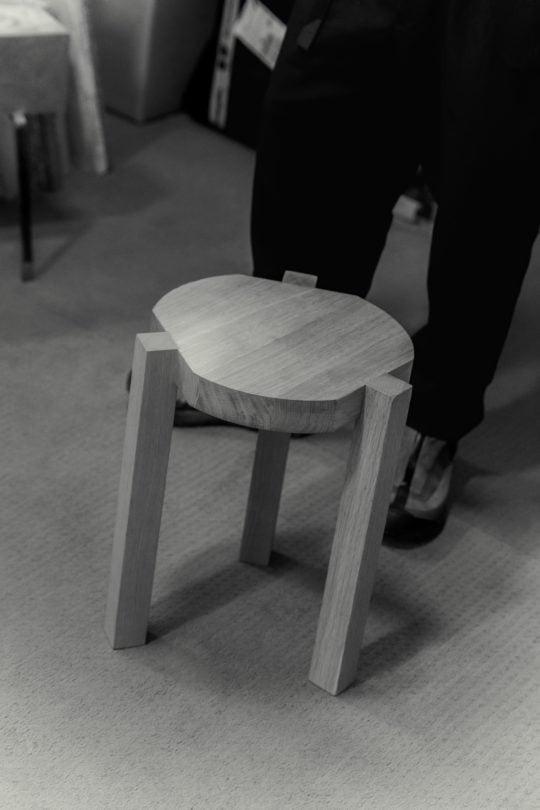
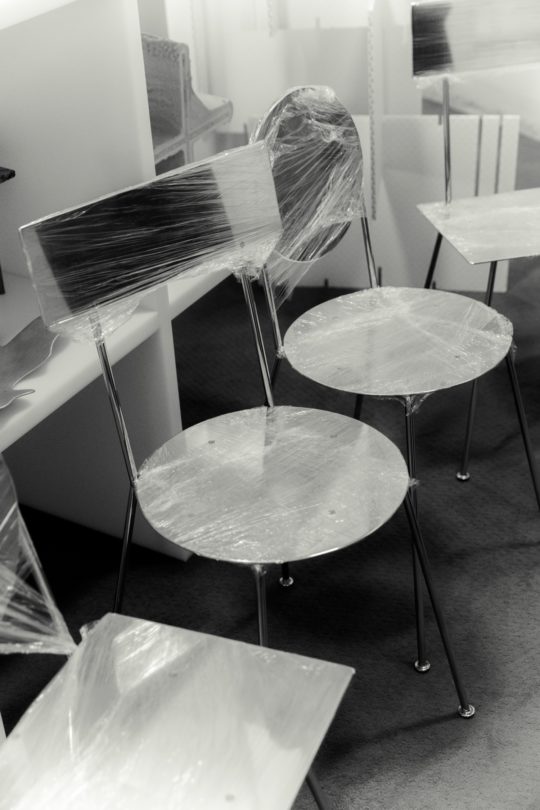
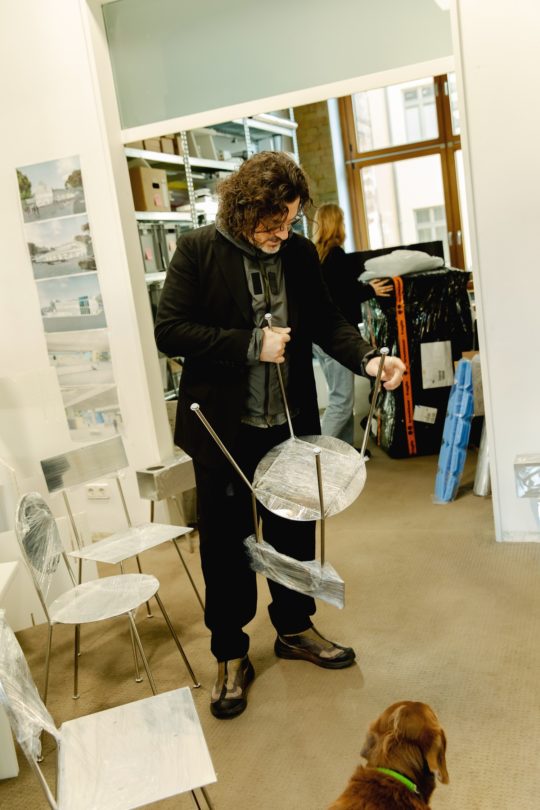
GONZALEZ: We will be producing more objects this year—chairs, tables, lamps—and these will be available online for purchase. Maybe we will even set up a showroom. We need to move to a bigger space.
WIMETT: After designing so many spaces, this seems like a natural step.
GONZALEZ: We want more independence through these objects.
HAASE: And we love thinking across different scales.
WIMETT: And people will want your designs, your signature, in their homes, I certainly would.
GONZALEZ: We hope so.



 to discuss […])